“The illiterate of the 21st century will not be those who cannot read and write, but those who cannot learn, unlearn, and relearn.” -Alvin Toffler

Wednesday, September 28, 2022

Focus: Domestic Preparedness Journal. September 2022. Tribal Nations Test Their Communications Capabilities

 Tribal Nations Test Their Communications Capabilities

By Bruce Fitzgerald

      Thunderbird and Whale was the first-ever national-level exercise thoroughly planned and executed by tribal nations. Lynda Zambrano, executive director of the National Tribal Emergency Management Council (NTEMC), shared her team’s approach to the exercise and how they maximized resources to benefit tribal and non-tribal communities in the Pacific Northwest.

Tribal Nations Take the Lead
The Thunderbird and Whale exercise simulated the scenario of a 9.0-magnitude earthquake and a resulting 100-foot tsunami so tribal first responders could practice responding to a catastrophic disaster. The exercise covered the area along the Cascadia fault line, spanning from northern California to Alaska, including jurisdictions as far north as British Columbia and as far east as Montana. Satellite communications hubs were also set up in Florida, Virginia, and Southern California to support the operations. 

The Federal Emergency Management Agency (FEMA) planned to conduct its traditional Cascadia Rising national-level exercise as a discussion-based engagement. However, tribal public safety organizations wanted to take this further with a full-scale exercise. The natural choice to plan and execute the training was the NTEMC, a network of tribal nations that promote emergency management best practices. According to Zambrano:

Our organization was asked if we would take the lead on a national-level, full-scale functional exercise for the tribes so they could physically engage and exercise their comprehensive emergency management plans.

The challenge was that, instead of the typical 2-4 years to prepare for a nationallevel exercise, the tribes had six months and no funding. Zambrano said, “A real-life event will not take a vacation or wait on us, so we felt it was imperative that we do this for our tribes.”

The Story of Thunderbird and Whale 
Once tribal nations took the lead, they changed the name of the exercise from Cascadia Rising to Thunderbird and Whale to reflect a traditional story within Pacific Northwest tribes that dates back thousands of years. Here is Zambrano’s version of the story and how it relates to the exercise: 


Thunderbird soared far out over the placid waters of the ocean. As quick as a flash, the powerful bird darted and seized Whale in its flinty talons and soared away toward the land. Thunderbird carried Whale to its nest in the lofty mountains. The two fought a terrible contest, resulting in shaking and trembling of the earth beneath (representing the earthquake) and a rolling of the great waters (representing the tsunami). 


With a new name reflecting their heritage, the tribes planned and coordinated a realistic exercise that would benefit the tribal and non-tribal communities in the Pacific Northwestern U.S. 

Communications as a Priority 
With only six months to plan, the tribes initially focused on communications, which FEMA identifies as Emergency Support Function #2 (ESF-2) in the National Response Framework. To create a realistic exercise, the tribes simulated zero communications after the earthquake hit. “We told everybody they had to turn off their cell phones and couldn’t use their laptops or answer email or text messages,” said Zambrano. The plan for initial communications was to use ham radios, which do not rely on infrastructure like towers and can operate on battery or solar power. 

The next critical step was to get a FirstNet deployable on-site. FirstNet deployables are stationed around the country and can be on-site within 14 hours of the initial request. Using ham radios to send an email via radio pathways, they contacted the FirstNet Response Operations Group at AT&T, led by former first responders. Based on the assessed public safety needs, the group guided the deployment of the FirstNet deployable assets. In the case of this exercise, the group deployed a FirstNet SatCOLT (satellite cell on light truck) to the NTEMC’s emergency operations center to provide connectivity via satellite. The SatCOLT also came with a cache of FirstNet devices that responders could test in real-time, using features like push-to-talk. 

“The assumption was that, due to the earthquake, we had no cellular communications and very limited email and data until a SatCOLT arrived,” said Zambrano. “I am very proud and happy to report that everything ran extremely smoothly, and the support was there and on time.   By the following day, we were able to initiate cell phone, email, and internet traffic.” Communications are one of the most valuable tools in responding to disasters. “The FirstNet SatCOLT was a critical piece of equipment for us to be able to communicate with the outside world during the disaster,” said Zambrano. “Without it, we would have been dead in the water for a very long time.”


Exercise Benefits the Community 
With communications secured, the tribes expanded the exercise to encompass all 15 emergency support functions. “This truly became a full-scale exercise,” said Zambrano. 

The Thunderbird and Whale participants used the exercise’s resources to assist communities in the Pacific Northwest directly. Pilots – who volunteered to provide transportation for the exercise’s food distribution agencies – distributed 80,000 pounds of food, water, and supplies to coastal tribal nations and local food banks, just as they would in an actual disaster. 

Another benefit of the exercise was that participating tribes learned each other’s best practices for emergency management. “One of the tribes engaging in this exercise saw what we were doing and said, ‘Why are we not working with FirstNet?’ And they immediately had FirstNet come out and do a presentation. Now they’re shifting all their first responders to FirstNet,” said Zambrano. 

She stressed that, even considering all the other benefits, the real point of the exercise was saving lives. “I really wanted to bring the focus back to the number of lives that were saved by conducting this exercise,” said Zambrano. “If we don’t talk about the number of lives saved, then we’ve lost the point of having communications.”

Exercise Support
The Thunderbird and Whale exercise used a template from the Homeland Security Exercise and Evaluation Program (HSEEP) planning documents. The FirstNet Authority offers support to emergency managers preparing similar plans through the agency’s Network Experience Engagement Program (NEEP), which includes: 
• Pre-incident or event support, 
• An exercise inject catalog, and • Post-incident or event reviews. 

This article was updated with permission from the First Responder Network Authority. 


Bruce Fitzgerald is the First Responder Network Authority’s senior public safety advisor for Emergency Management. Prior to joining the FirstNet Authority, he worked at AT&T as a FirstNet principal consultant for Maine and Vermont, where he partnered with public safety agencies to adopt and implement FirstNet. He has experience in crisis management, fiscal and program direction, and government relations at the federal, state, and local levels. He worked for 14 years at the Maine Emergency Management Agency (MEMA), serving as the state emergency management and homeland security director among other roles. He also served as chair of the Governor’s Homeland Security Advisory Council (HSAC). He has served as the FEMA Region 1 vice president, national committee co-chair, and member of the board of directors for the National Emergency Management Association and worked closely with state partners and Canadian provinces through the Northeast States Emergency Consortium and the International Emergency Managers Group. During statewide emergencies, he served as the emergency operations center coordinator with responsibility for coordinating the Emergency Response Team and Disaster Recovery Team. In that role, he responded to the St. Patrick’s Day and Patriot’s Day disasters in 2007, a statewide ice storm in 2014, and national hurricanes Katrina, Rita, Irene, and Sandy. In 2012, he led a team of state and private officials and the National Guard to assist the City of New York in recovering from Hurricane Sandy


September 2022, Domestic Preparedness Journal                           www.domesticpreparedness.com


Copyright © 2022, Texas Division of Emergency Management


Focus: Domestic Preparedness Journal. September 2022. Whole Community. Resources Not To Be Overlooked

Resources Not to Be Overlooked

 By Catherine L. Feinman 

The term “whole community” is frequently used in preparedness materials and discussions. 

In practice, though, how often is the whole community represented and all community resources considered? 

Routine planning meetings and exercises use the same phone and email lists. The regular participants get to know each other and build beneficial relationships. 

The key players in the last emergency response prepare for the next response. 

However, the standard phone and email lists and the contacts from the last response may not include other valuable community stakeholders and critical resources. 

Even during interagency meetings and exercises, it can be easy to get comfortable with the same names and faces. When emergencies and disasters occur, though, there are many others beyond those participants who could be leveraged for support and resources. 

Consider the stakeholders and resources that are not always included in whole community planning efforts. 

For example: 
• Tribal emergency management and rural stakeholders may have unique resources and different preparedness needs. 
• Volunteers have a lot to offer, but planning is needed to coordinate efforts and leverage their knowledge, skills, and resources. This includes Community Emergency Response Teams and general aviation. 
• The private sector includes critical communications capabilities and other valuable resources that may be underutilized when not included during the planning process. 
• Military personnel have life-saving skills that can be taught and applied to civilian mass casualty scenarios and emergency response efforts. 

In general, whole community preparedness means involving key stakeholders in developing preparedness plans and procedures and ensuring that their roles and responsibilities are outlined in those plans. 

When key players are not involved or valuable resources are not recognized during the planning phase, gaps are realized during the response and recovery phases. 

For example, as COVID-19 spread, the need for new planning partners and new resources was realized. 

In addition, the capabilities and contributions of nontraditional partners were recognized. With the many lessons from the past two years, now is the time to build resource capacity and look beyond the typical planning partners and resources. 

Before the next pandemic, school shooting, violent extremist attack, or natural disaster, identify unused or underutilized resources and invite new faces to the whole community planning table. 


September 2022, Domestic Preparedness Journal                             www.domesticpreparedness.com 

Copyright © 2022, Texas Division of Emergency Management

Focus: Domestic Preparedness Journal. September 2022. Military Combat Skills for Civilian Disaster Response


Military Combat Skills for Civilian Disaster Response

By Lisa Nenno & Timothy Miller 

Partnering with tribal and other civilian stakeholders, military veterans provided a unique perspective and training experience during this exercise.  

Click HERE to listen to the Article Out Loud 


Copyright © 2022, Texas Division of Emergency Management

Focus: Domestic Preparedness Journal. September 2022. Aviation Response.


Taking Flight – Creating a Robust Aviation Response, Part 1 

By Sky Terry

This article describes general aviation pilots’ efforts to significantly advance their communities’ disaster response over the past two years. 

Click HERE to listen to the Article Out Loud 


Copyright © 2022, Texas Division of Emergency Management

Florida Hurricane Relief. Shelter. Recovery\Homeless shelter location September 28, 2022

I crisis could contribute to transitioning housing\shelter for those in recovery\homeless.

BEMA International


  Click on OPEN shelter location in map to get additional information.


Tuesday, September 27, 2022

FOCUS: EM Situation Awareness of Environmental Justice and Climate. Subscribe to EPA Science Matters, or look for posts on BEMA International

As Emergency Managers situation awareness of environmental justice and climate change are a vital part of our daily activity.  EM supports the impacts of environmental and climate change when a crisis or disaster\emergency occurs.

BEMA International

EPA Science Matters: Green infrastructure, African swine fever virus, and more

Having trouble viewing this email? View it as a Web page.

Science Matters header

September 27, 2022


EPA's Science Matters newsletter delivers the latest from EPA's Office of Research and Development straight to your inbox. Keep scrolling to read about recent news and upcoming events.

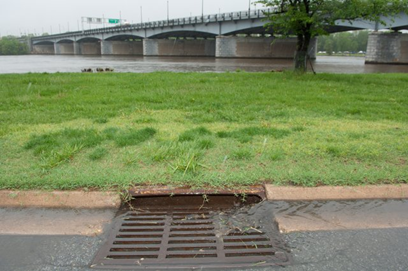
Water entering storm drain

EPA researchers are helping communities manage stormwater using green infrastructure. Read about their work below.


EPA Research Updates


Runoff from stormwater continues to be a major cause of water pollution in urban areas. To address this problem, cities are increasingly using green infrastructure — a variety of practices that use soil and vegetation to capture, filter, and reduce stormwater. EPA designed a framework to support the use of green infrastructure by assisting communities in making informed decisions surrounding stormwater planning and management.

Sometimes a research challenge leads to the invention of a cutting edge technology. While onsite at a water treatment plant, EPA engineer David Wahman’s team needed to measure free chlorine from parallel filters. To fill this need, Wahman created and patented the Sample Device for Mobile Water Analysis to support the simultaneous analysis of multiple water samples when using a mobile water analysis device.

African swine fever virus is a deadly pig disease that spreads rapidly and can affect domestic and wild swine. While it has never been detected in the U.S., it is important to find ways to protect our food supplies, the pork industry, and swine around the country in the event of an outbreak. EPA researchers and responders are working with USDA’s Animal Plant Health Inspection Service to develop disease control measures and test approaches to manage infected waste, including mortality management.

Traditional toxicity testing can be time and resource intensive. To fill this gap, EPA researchers are developing and improving tools, databases, and resources to determine chemical safety in a more efficient, data driven way. New versions of the CompTox Chemicals Dashboard and GenRA bring added features and more data to meet the evolving needs of chemical risk assessment.

Enhanced aquifer recharge (EAR) is the practice of using excess surface water to intentionally replenish and supplement existing groundwater supplies for storage and potential reuse. We awarded $2 million in research funding to the University of California, Berkeley to develop a cost-benefit tool to support EAR as a viable, safe, and cost-effective water management strategy. You can apply for EAR research funding now through Nov. 9. Register for a Sept. 29 informational webinar to learn more.


Meet Our Researchers


Katie

Meet EPA Researcher Katie Williams, Ph.D.

Katie is an EPA researcher studying how individuals, organizations, and agencies are engaged in environmental management in the Great Lakes Areas of Concern program. To understand these dynamics, Katie researches policies, learns about how different people use information and knowledge, and maps institutional processes. Learn about Katie's work.


Events


Science Matters is produced by the U.S. Environmental Protection Agency, Office of Research and Development. All content is copyright free and can be reprinted without permission.

Questions or comments? Send us an email.

EPA Research | EPA Science Matters 


Focus: Environmental Justice and Climate Advocates.. Corporate Opponents. Get to the heart of environmental justice and climate change.

Emergency Management steps in as a support entity planning for the disasters from environmental and climate change impacts.

The center\heart of environmental justice and climate will come with a focus of the advocates on the corporations and main contributors to contamination in communities not only in the U.S. but globally.

Globally, consider the frenzy for Cobalt in the Democratic Republic of the Congo (DRC) and the plight of the workers in dangerous conditions, and the environmental impact.

Now is the time to recycle and put other uses to existing fossil fuel by-products mentioned (plastics, chairs, tables, etc.) in the hearing by the representative from Louisiana. Cleanup the damage that has occurred to let the planet heal itself.

Change must occur NOW.

BEMA International


Systems Engineering. Concepts for HARD (aircraft, auto, space craft, etc.), and SOFT (CERT program, Recovery\Homeless programs, Training, Education, etc.) systems.

Systems Engineering Approach

From simple systems, to complex-complex system.  

Knowing the components, external and internal interactions can lead to solutions\actions to problems both social and mechanical systems.  Basis of problem solving?


Black Emergency Managers Association International
Washington, D.C.
bEMA International

Cooperation, Collaboration, Communication, Coordination, Community engagement, and  Partnering (C5&P)

A 501 (c) 3 organization

"It is my belief that the best results in business come from a creative process, from the ability to see things differently from everyone else, and from finding answers to problems that are not bound by the phrase 'we have always done it this way.' "  Wayne Rogers


International Day of the Girl Child & Domestic Violence Awareness Month. African Communities Public Health Coalition (LA) October 11, 2022

In honor of Domestic Violence Awareness Month and to celebrate the International Day of the Girl Child, in collaboration with the Greater Los Angeles Female Genital Mutilation Taskforce, the African Communities Public Health Coalition would like to share this upcoming virtual discussion panel on Tuesday October 11th at 11:30am. 

Contact our team for collaborative interests and feel free to share this info with others you know who may be interested in this free event. Listed in the flyer below.

Best wishes,


Black Emergency Managers Association International
Washington, D.C.
bEMA International
Cooperation, Collaboration, Communication, Coordination, Community engagement, and  Partnering (C5&P)


A 501 (c) 3 organization

We must act as if we answer to, and only answer to, our ancestors, our children, and the unborn. — Amilcar Cabra


Monday, September 26, 2022

Focus: Environmental Justice and Climate. Homeland Security issue or Environment & Public Works at the Federal Level. Compare. Sept 26, 2022

House Committee on Homeland Security

 -   https://homeland.house.gov/subcommittees

Senate Committee on Environment & Public Works

 https://www.epw.senate.gov/public/index.cfm/subcommittees

  • Any overlap?
  • Which has focus on environmental justice and climate change?
This points in direction of main entity to utilize for community sustainability.

BEMA International

EPA as a tool for underserved communities within the U.S. and Globally.

EPA (Environmental Protection Agency) has detection, monitoring & evaluation, and a monetary bite across the board in all sectors.  ECJ has to go at the heart of the issue in contamination in I’d say over 95% of the cases Nationally in the U.S., and Globally, Corporations.

Now is the time to go toe-to-toe with the corporations with ESG, Justice40, and ECJ as additional justification for communities within the U.S. and globally.  Justice40 impacts ALL federal agencies even international (USAID, International Trade, etc.). 

NAACP are comprised of many in the legal profession.  Courts are where the battle will be won, and justice prevails.

CDS
Chair\CEO
BEMA International

Popular Posts

ARCHIVE List 2011 - Present

Search This Blog

Environmental Justice

Recovery\Homeless Shelters. U.S.