|
Water
going in and water going out central to Wholestone Farms plans for pork plant
in Sioux Falls
Processing hogs
requires a tremendous amount of water. Opponents of a new slaughterhouse in
the city limits say it will stress supply and raise concerns about the amount
and quality of the discharge. Wholestone maintains modern design anticipates
potential problems.
www.agweek.com
October 21, 2022 04:24 PM
SIOUX
FALLS, S.D. — It takes a lot of water to turn a live pig into pork chops, ham
and bacon.
A key element in Wholestone Farms’ decision to build a pork
plant in northeast Sioux Falls is access to a dependable water supply.
“Any plant is going to use a tremendous amount of water,” said
Terry Houser, the Smithfield Foods chair in meat science extension at Iowa
State University.
Water coming in and water going out.
Those challenges are
among the points that city voters will weigh when they go to the polls on
Nov. 8.
The city
currently has plenty of drinkable water coming in, which is required to
produce safe meat. The going out question is how you cleanse and
dispense of wastewater when you’re done.
The potential
for pollution is
one of the top points of contention for Wholestone’s detractors. The plan
includes building a $45 million treatment plant, which will remove the
solids, compounds and chemicals before discharging the clean water back into
the Big Sioux River.
Pollution is a top-of-mind issue, in
part, because wastewater has been a problem at the Smithfield pork plant near
Falls Park. Smithfield and previous owners have faced numerous fines over the
decades for violations of its discharge permit, including about $100,000
total for violations in 2018 and 2019.
Wholestone
leaders counter that reputation, saying a new plant won’t suffer from those
same problems. Proper planning, modern technology and redundancy can prevent
problems before they become environmental violations, they say.
Smart
Growth Sioux Falls is asking voters to change local ordinances to ban any
future slaughterhouses from building in city limits. While Wholestone’s name
does not appear on the ballot, the farmer-owned cooperative’s plan to build
the plant is what motivated the initiated measure.
The
potential odor is the centerpiece of Smart Growth’s “stop the stink”
campaign, but it’s water, labor and transportation that brought Wholestone to
Sioux Falls.
“Wholestone’s
slaughterhouse would draw an additional three million gallons per day from
our city’s water supply, making water scarcer for everyone else. The plant
would guzzle up more water each day than 32,000 typical South Dakota
residents,” Robert Peterson, Smart Growth’s treasurer and spokesperson, said
in a statement.
How much water?
Smart Growth says they aren’t against the plant or value-added
agriculture, just not in the city limits. But the quality and quantity of
water required is precisely why Wholestone wants to be inside that line.
It’s that balance between competing interests, between the
ideal landscape and the hard reality, that voters must balance.
How much water is involved?
On average, a pork processing plant in the United States uses
100 gallons of water for every pig slaughtered. That includes all the water
used for things like refrigeration, creating steam for sterilization and
scalding, carcass cleaning, hand washing and restrooms.
The Wholestone plant, because it’s a new facility, would use
around half that, said Rachel Kloos, the water and wastewater group leader
for ISG, the Sioux Falls engineering firm that is designing the plant.
That’s because they are conserving and reusing water at a
greater rate than an older plant, she said. The federal government and the
food industry at large, facing increasing challenges from climate change and
other factors, stress that finding ways to reduce water consumption is
paramount.
Kloos estimates the Wholestone plant will use about a million
gallons of water a day but they have requested 1.5 to 2 million gallons a day
from the City of Sioux Falls Public Works Department.
Representatives for the city did not respond to several
interview requests from Forum News Service on the topic.
Federal food safety regulations require that any animal
processing plant begins the process with “potable” water, which means it’s
safe for humans to drink. But it’s still not clean enough to ensure it
doesn’t introduce any contaminants, so additional treatment is required.
“We need our water to be as clean as possible,” said Kloos.
“The good quality water that is coming from the City of Sioux Falls allows us
to be more efficient in our process.”
Treating the wastewater
Then there’s the water going out.
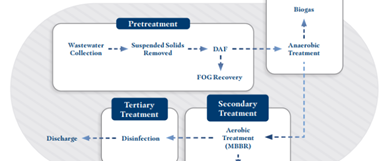
The plant design includes a standalone water treatment
facility. While it’s similar in concept to how a city treats water from homes
and businesses, there are additional steps that are required to remove the
pig parts, hair and some other solids which have value, such as fats, oils
and grease.
Then the wastewater goes into covered lagoons where anaerobic
digestion, which means there is no oxygen present. This process uses
biological compounds to remove organic materials, which is common in
wastewater treatment
This
schematic shows the flow of wastewater in the proposed treatment facility for
Wholestone Farms pork processing plant in Sioux Falls. DAF is an acronym for
dissolved air flotation system, which removes suspended solids and recovers
fats, oils and grease, or FOG. MMBR stands for moving bed biofilm reactor,
which is part of the process that removes ammonia and phosphorus to reduce odorContributed /
Wholestone Farms Methane gas is a byproduct of the covered lagoons. That gas is
captured and used as fuel, replacing as much natural gas as possible.
When it’s completely treated, the water will be pumped into
the Big Sioux River.
The city as a whole has a discharge allocation of 30 million
gallons of water a day, said Kloos. The Wholestone plant will discharge a
maximum of 3 million gallons, which is similar to that of Smithfield.
Smithfield also has a wastewater treatment facility, which was
built in 1982 and updated several times since, most recently in 2019,
according to inspection documents from the South Dakota Department of Natural
Resources.
The capacity of the Smithfield treatment system was upgraded
in 2019 to deal with heavy rainfall events, according to the DENR.
“The Big Sioux has an allocation. The state says you can put
this much in before it gets stressed,” said Kloos. “The state looks at that
very closely and makes sure that we don't stress the ecosystem.”
Smart Growth contends that the potential for degrading the
water quality of the Big Sioux — which exits the city shortly after flowing
past Smithfield, the city’s wastewater plant and the Wholestone site — isn’t
worth the added risk.
“Pollution in the Big Sioux is already over the limit and last
year earned an ‘F’ grade for unsafe levels of sediment, E. Coli, and
nitrates,” Peterson said in a statement. “Any significant increase from
slaughterhouses would jeopardize water quality, recreation, and wildlife —
and potentially restrict future commercial development.”
There are no guarantees, said Kloos.
But that’s why the system is designed with redundancies and
backups that anticipate potential problems. Today’s facilities have the
benefit of the lessons learned from the past. Those experiences inform
today’s technology, Kloos said.
“I’d be silly to say we’ve never run into issues, that would
be ridiculous,” she said. “The more we can plan and prepare, the more we can
reduce those situations.”
Outside
the city
There aren’t that many
sources for that much water in the region.
It’s a limiting factor when it comes to industrial development
outside the city limits of Sioux Falls.
The Minnehaha Community Water Corporation supplies the
households and businesses outside of Sioux Falls, Brandon and Valley Springs.
The corporation is allocated 2 million gallons a day from the Lewis &
Clark pipeline but relies on the Big Sioux aquifer for the rest of its needs.
The peak use for those customers is nearly 7 million gallons, said
Scott Buss, the corporation's executive director.
Buss said he gets inquiries from companies looking to build in
the county but water is a limiting factor.
Recently an agriculture company was hoping to get a million
gallons a day for a new development.
“We had to say there is not enough source water in Minnehaha County today to
support that,” Buss said.
A million gallons a day can support 4,300 rural
households,
he said. “That forces some tough decisions.”
It would be extremely difficult to find a site for a project on
the scale of Wholestone Farms in the area, said Jesse Fonkert, CEO of Sioux
Metro Growth Alliance, which is an economic development arm of Minnehaha
and Lincoln counties.
The Alliance
opposes the Nov. 8 ballot initiative that would ban future slaughterhouses in
Sioux Falls, saying it would set a bad precedent for business development.
Regardless of the results of the election, the availability of
water and utilities is a clear problem. And beyond that, if those needs can
be met, there could be zoning challenges outside of Sioux Falls, said
Fonkert.
“It’s not impossible with the right players and the right
approach,” he said. “I
don't have a single site today that could handle Wholestone if they wanted to
start construction tomorrow.”
Houser, the Iowa State Extension economist, said the Sioux Falls
area needs more pork processing capacity, given the number of pigs produced
in the region, including in Northwest Iowa.
It’s not easy, but it’s necessary to ensure food security
long-term, he said.
“You need a lot of water, you need utilities and a labor force.
You have to have access to transportation and livestock,” Houser said. “They
are all in that area around Sioux Falls. Why would we want to drag them all
over the earth to get them slaughtered when you could do it so close to where
they are being raised?”
SOUTH DAKOTA
Lalley: Farmers'
call to action symbol of stakes in Sioux Falls slaughterhouse debate
Agriculture community perplexed by POET's opposition to
Wholestone Farms' plans for pork processing plant in the city. A few farmers
writing letters to newspapers to send a message to Jeff Broin, CEO of the
biofuels producer, and to the voters.
October 21, 2022 10:01 AM
·
By Patrick Lalley
Methane gas is a byproduct of the covered lagoons. That gas is
captured and used as fuel, replacing as much natural gas as possible.
When it’s completely treated, the water will be pumped into
the Big Sioux River.
The city as a whole has a discharge allocation of 30 million
gallons of water a day, said Kloos. The Wholestone plant will discharge a
maximum of 3 million gallons, which is similar to that of Smithfield.
Smithfield also has a wastewater treatment facility, which was
built in 1982 and updated several times since, most recently in 2019,
according to inspection documents from the South Dakota Department of Natural
Resources.
The capacity of the Smithfield treatment system was upgraded
in 2019 to deal with heavy rainfall events, according to the DENR.
“The Big Sioux has an allocation. The state says you can put
this much in before it gets stressed,” said Kloos. “The state looks at that
very closely and makes sure that we don't stress the ecosystem.”
Smart Growth contends that the potential for degrading the
water quality of the Big Sioux — which exits the city shortly after flowing
past Smithfield, the city’s wastewater plant and the Wholestone site — isn’t
worth the added risk.
“Pollution in the Big Sioux is already over the limit and last
year earned an ‘F’ grade for unsafe levels of sediment, E. Coli, and
nitrates,” Peterson said in a statement. “Any significant increase from
slaughterhouses would jeopardize water quality, recreation, and wildlife —
and potentially restrict future commercial development.”
There are no guarantees, said Kloos.
But that’s why the system is designed with redundancies and
backups that anticipate potential problems. Today’s facilities have the
benefit of the lessons learned from the past. Those experiences inform
today’s technology, Kloos said.
“I’d be silly to say we’ve never run into issues, that would
be ridiculous,” she said. “The more we can plan and prepare, the more we can
reduce those situations.”
Outside
the city
There aren’t that many
sources for that much water in the region.
It’s a limiting factor when it comes to industrial development
outside the city limits of Sioux Falls.
The Minnehaha Community Water Corporation supplies the
households and businesses outside of Sioux Falls, Brandon and Valley Springs.
The corporation is allocated 2 million gallons a day from the Lewis &
Clark pipeline but relies on the Big Sioux aquifer for the rest of its needs.
The peak use for those customers is nearly 7 million gallons, said
Scott Buss, the corporation's executive director.
Buss said he gets inquiries from companies looking to build in
the county but water is a limiting factor.
Recently an agriculture company was hoping to get a million
gallons a day for a new development.
“We had to say there is not enough source water in Minnehaha County today to
support that,” Buss said.
A million gallons a day can support 4,300 rural
households,
he said. “That forces some tough decisions.”
It would be extremely difficult to find a site for a project on
the scale of Wholestone Farms in the area, said Jesse Fonkert, CEO of Sioux
Metro Growth Alliance, which is an economic development arm of Minnehaha
and Lincoln counties.
The Alliance
opposes the Nov. 8 ballot initiative that would ban future slaughterhouses in
Sioux Falls, saying it would set a bad precedent for business development.
Regardless of the results of the election, the availability of
water and utilities is a clear problem. And beyond that, if those needs can
be met, there could be zoning challenges outside of Sioux Falls, said
Fonkert.
“It’s not impossible with the right players and the right
approach,” he said. “I
don't have a single site today that could handle Wholestone if they wanted to
start construction tomorrow.”
Houser, the Iowa State Extension economist, said the Sioux Falls
area needs more pork processing capacity, given the number of pigs produced
in the region, including in Northwest Iowa.
It’s not easy, but it’s necessary to ensure food security
long-term, he said.
“You need a lot of water, you need utilities and a labor force.
You have to have access to transportation and livestock,” Houser said. “They
are all in that area around Sioux Falls. Why would we want to drag them all
over the earth to get them slaughtered when you could do it so close to where
they are being raised?”
SOUTH DAKOTA
Lalley: Farmers'
call to action symbol of stakes in Sioux Falls slaughterhouse debate
Agriculture community perplexed by POET's opposition to
Wholestone Farms' plans for pork processing plant in the city. A few farmers
writing letters to newspapers to send a message to Jeff Broin, CEO of the
biofuels producer, and to the voters.
October 21, 2022 10:01 AM
·
By Patrick Lalley
|
|