|


|
Black Emergency Managers Association International Washington, D.C. |
|
|||
|
||||
|
|
||||
|
|
||||
|
|
||||
|
|
||||
|
|

|
|
Black Emergency Managers Association International Washington, D.C. |
|
|||
|
||||
|
|
||||
|
|
||||
|
|
||||
|
|
||||
|
|
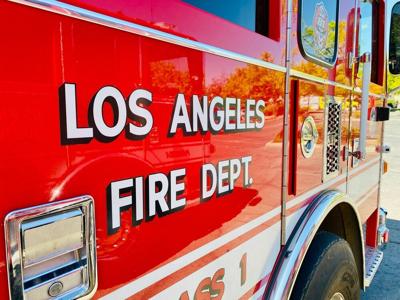
(The Center Square) – Eighty-six Los Angeles Fire Department employees made more than $400,000 in 2022, including a fire captain who made $712,933 last year.
That fire captain was the highest-paid employee in the city. The captain had a base pay of $169,764 and was paid $502,681 for overtime, along with $19,637 in other pay and personnel benefits of $20,851. In 2021, the highest-paid employee also was a fire captain. That captain made $434,394 in overtime in 2021, for total pay of $598,532.
The fire department spent $817.4 million on payroll in 2022, a 2.4% increase from $798.2 million the year before. Overtime costs in 2022 decreased by 8% to $225 million from $244.9 million the year before.
Last month, the Board of Fire Commissioners requested $904 million for the department's 2023-24 budget. That includes $838 million for its operating budget, an increase of 7%, or $55 million, according to the final proposal. The budget includes a 4.5% pay increase for sworn firefighters. The fire union agreed to delay that pay hike until 2023 in exchange for a promise from the city to avoid layoffs. That agreement was reached in 2021, according to media reports and union announcements.
Overall, 86 members of the city's fire department were paid more than $400,000 in 2022, according to the city's Payroll Explorer. That's the same number as in 2021.
The average mean wage for a surgeon in California in 2021 was $351,580, according to the U.S. Bureau of Labor Statistics. The average pay for a fire chief in Los Angeles in 2022 was $320,336.44, according to Payroll Explorer.
The second-largest city in the U.S. employed 3,649 firefighters in 2022.
The fire department did not return an email seeking comment on its pay practices and overtime use.
During
the 70th Anniversary of the United Nations Declaration of Human Rights let’s
take #29 (RESPONSIBILITY) to develop and apply the knowledge and to join our
2015-2020 Inter-Faith, Neighborhood and Business 4 Peace strategic alliance
to identify and register 4,000+ civil society stakeholders (ngos,
nonprofits, business associations, labor organizations, academic institutions
and cities) and 1,000 new small and medium-sized enterprises (SMEs) with
the United Nations Global Compact to build a Caring 4 Climate worldwide
community resiliency network:
We advocate the United Nations Global
Compact Local Network Membership Campaign for for Sustainable Development Goal # 11 by 2020,
substantially increase the number of cities and human settlements adopting
and implementing integrated policies and plans towards inclusion, resource
efficiency, mitigation and adaptation to climate change, resilience to
disasters, and develop and implement, in line with the Sendai Framework for
Disaster Risk Reduction 2015-2030, holistic disaster risk management at all
levels in support of the 2030 Sustainable Development Agenda through BUSINESS4PEACE Multi- Stakeholder Partnerships
#17.16 and #17.17 to “Leave No One Behind” by:
Enhancing
the global partnership for sustainable development, complemented by multi-stakeholder
partnerships that mobilize and share knowledge, expertise, technology
and financial resources, to support the achievement of the sustainable
development goals in all countries, in particular developing countries, underserved,
displaced and homeless communities and people with unmet needs worldwide [emphasis
added]..
Encouraging
and promoting effective public, public-private and civil society partnerships, building on the experience and resourcing
strategies of partnerships, building on the experience and resourcing strategies
of partnerships, including Freelancer, , Home-Based, Micro-
and Small-Medium-Enterprise businesses [emphasis added].
Thanking
you, in advance, all the activists, ambassadors and people of the world
committed to “Make That Change” for themselves and the generations
to follow as we Heal Los Angeles to Heal the World for our children,
our wildlife and our Earth’s Biosphere using Asset Based Community
Development (ABCD) Collective Impact regenerative design and development
tools and solutions.
Andrew
Williams Jr.,
Chairperson June 19, 2018

Jan 03,2023 - Last updated at Jan 03,2023
By Laura Tyson and Lenny Mendonca
BERKELEY — A new breed of industrial policy is taking hold in the United States. Under President Joe Biden’s leadership, the federal government has created major new programs through the Infrastructure Investment and Jobs Act ($550 billion), the CHIPS and Science Act ($280 billion), and the Inflation Reduction Act ($394 billion).
These are not traditional spending measures to stimulate demand. Rather, as Secretary of the Treasury Janet Yellen explains, they are supply-side investments to boost US economic capacity, both overall and in key sectors such as semiconductors and renewable energy.
While the individual provisions and funding processes differ, all three programmes are based on the public-private model that has been critical to US competitiveness over the past century. They are designed to crowd-in and accelerate private investment, not substitute for it. Hence, a significant part of their funding, in fact, the majority, in the case of the IRA and CHIPS, comes in the form of tax credits for businesses.
The programmes also will encourage more supportive regulatory changes, for example, in the permitting and siting of green-energy projects, by state and local governments, which are responsible for the bulk of economic development in the US. And they share various features that have come to define a new “sustainable and equitable” approach to industrial policy. These include a focus on regional economic development based on local priorities, with an emphasis on capacity-building in marginalised communities; explicit links to post-secondary education and workforce development; and cross-sector integration with key services, such as health care and education.
While the success of these programs will require collaboration by state and local governments, those authorities will also be competing for the new funding and investments. For example, the CHIPS Act’s $39 billion for investments in domestic semiconductor manufacturing will be allocated by the Department of Commerce, which will assess companies’ proposals for grants and loans partly on the basis of support from state and local governments. Accordingly, several states are now developing generous incentives to help their companies.
The states will also be competing, alongside their companies, civic organisations, and non-profits, for $122 billion in climate-related funding under the IRA. While the Department of the Treasury oversees tax credits, a new $27 billion Environmental Protection Agency grant programme, the Greenhouse Gas Reduction Fund, makes $7 billion directly accessible to cities and states, and earmarks $20 billion for non-profit entities that invest directly in green projects using other financing entities such as non-profit green banks. Twenty-three green banks already exist in 17 states, including California, and have leveraged $2 billion in public funds to mobilise $7 billion in green investments.
All three bills include place-based programmes designed to promote inclusive growth, and these have elicited complementary efforts at the state and local level. California, for example, has introduced a Community Economic Resilience Fund with a four-year $600 million budget to support regional collaboration and inclusive development; and Phoenix has committed significant local funding and made regulatory changes to attract a $40 billion investment by TSMC in new semiconductor production.
Broadband deployment is especially important for regional economic development. As the COVID-19 pandemic showed, the US still has a glaring digital divide, with more than 24 million Americans lacking high-speed broadband, and many more lacking digital literacy. Thanks to the infrastructure program and the American Rescue Plan before it, however, more than $100 billion in federal funding has been allocated to bring broadband to every household. It is the largest public investment to connect Americans since the creation of the interstate highway system. Still, closing the gaps in middle- and last-mile connectivity is a highly local challenge, and coordination across all levels of government is crucial.
Finally, a healthy, skilled workforce is the most important factor in attracting and retaining employers and businesses in key sectors. Hence, many states, cities and regions have been increasing their investments in workforce development to ensure that their residents have the right skills to benefit from new job opportunities in infrastructure, semiconductors, and climate-related industries.
California is a case in point. The state spends more than any other on higher education, and has invested in new community-college apprenticeship programmes and career pathways for technical education in its public schools. At their best, programmes to develop the workforce run from preschool to higher education and then to employer engagement.
The Biden administration’s three big industrial policy programs all recognise the importance of human capital in building supply capacity, and each provides some support for skills development, primarily through tax credits to employers. The IRA, for example, contains a dozen energy-related tax credits to expand access to apprenticeships and jobs at prevailing wages. But a proposed $40 billion provision for workforce-skills development did not make it into the final bill, which means that the task has been left largely to cities, states, employers and individuals.
By design, the new regional economic-development efforts are cross-sectoral and cross-governmental, from the state and local level to the federal level. Often, regional development efforts have one or more backbone institutions leading the charge and engaging with other community-based organisations and key sectors and institutions, such as education and healthcare providers. In California, the Central Valley Community Foundation has created a development plan (of 19 priority investments totaling roughly $4 billion over the next decade) under the guidance of a steering committee comprising 300 community leaders. Many similar efforts are in the works around the country, and many more are needed.
Industrial policy is central to Biden’s economic agenda. Getting an industrial policy right is never easy, and getting a place-based one right will prove even more challenging. But doing so is now essential to achieving more equitable and sustainable growth.
Laura Tyson, a former chair of the President’s Council of Economic Advisers during the Clinton administration, is a professor at the Haas School of Business at the University of California, Berkeley, and a member of the Board of Advisers at Angeleno Group.
Lenny Mendonca, senior partner emeritus at McKinsey & Company, is a former chief economic and business adviser to Governor Gavin Newsom of California and chair of the California High-Speed Rail Authority. Copyright: Project Syndicate, 2023. www.project-syndicate.org
Research the HiEd Program supported on COVID-19 vaccine hesitancy is mentioned on page 41 of this year’s report.
FEMA’s National Preparedness Report Underscores Continued Threat of Climate Change
FEMA released the 2022 National Preparedness Report, revealing the impacts that climate change and associated natural disasters continue to have on emergency management capabilities and communities across the country. This year’s report presents preparedness data through the lens of risks and capabilities and underscores the challenges that emergency managers face in addressing a continuously expanding risk environment, the ingenuity they have shown to rise to those challenges, and opportunities that remain to better prepare the nation. Emergency managers and whole community partners across the nation can look to this year’s report to help support decisions about program priorities, resource allocations, and community actions.
What does the 2022 report say about the state of the nation’s preparedness?
The report summarizes the state of national preparedness, discussing the risks the nation faces and how those risks drive whole-community emergency management capability requirements. The report includes the following findings, among others:
To better respond to these factors, FEMA has undertaken a series of initiatives to ensure that more communities, especially those that are the most vulnerable to the impacts of disasters, are better prepared when disaster strikes. For example, this National Preparedness Month, FEMA and the Ad Council created new Public Service Announcements developed specifically to reach Black and African American communities as part of FEMA’s ongoing approach to advance accessibility and cultural competency in boosting the nation’s preparedness. This campaign built on last year’s campaign, which was designed to resonate with Latino communities. As a direct result of that campaign, Listo.gov — the Spanish version of Ready.gov — had a 500% increase in visits to the "Make a Plan" page and a 400% increase in visits to the "Build a Kit" page.
Additionally, FEMA’s released its first-ever National Tribal Strategy this year to better address its responsibilities to federally recognized tribal nations when responding to and preparing for disasters affecting tribal lands. A key part of the strategy includes providing culturally competent services to Tribal Nations and translating FEMA products into Native American languages to ensure that everyone across Indian Country is prepared when disaster strikes.
Earlier this year, FEMA also implemented one of the largest updates in the past 10 years to its mobile app, largely driven by critical customer feedback. The updated app -- in English and Spanish -- gives users increased personalization options and help them take charge before, during and after disasters. This tool and others demonstrate FEMA’s continued commitment to meeting people where they are by providing the resources they need in a user-friendly way, with the ultimate goal of increasing disaster preparedness.
These initiatives represent just a few examples of the actions the agency is taking to sustain a ready FEMA and a prepared nation.
The National Preparedness Report was established in Presidential Policy Directive/PPD-8, signed in March 30, 2011, which required the Secretary of Homeland Security to submit to the President the first national preparedness report based on the National Preparedness Goal. The THIRA/SPR methodology has changed since FEMA published the first report in 2012 and will not allow for measurement of percentage change in capability levels over the past decade. However, the most significant increases in community capability achievement are evident in areas related to 1) intelligence and information sharing, 2) supply chain integrity and security, and 3) access control and identity verification.
The report provides management opportunities outlining steps that can be taken by the whole community to address risks and capability gaps. These include detailed discussions regarding resources and best practices related to 1) building community-wide resilience to climate change impacts; 2) reducing physical and technological risks to critical infrastructure; and 3) increasing equity in individual and community preparedness.
The information in this report was compiled from open-source research, analysis of community THIRA/SPR data, and an interagency data call of more than 50 offices throughout federal government.