|
https://www.cnn.com/2023/11/19/climate/mayotte-water-crisis-drought-climate/index.html
 Gripped by drought, this island
is running out of drinking water By Claudia Colliva, CNN Published 1:30 AM EST, Sun November
19, 2023 Lemor
David/ABACA/Shutterstock CNN — When Racha Mousdikoudine opens
her kitchen faucet, she never knows what will happen. “Maybe I won’t get any water at
all,” she told CNN. “Maybe I’ll get 30 minutes of water. Maybe the water will
only come after hours of waiting.” For the last four months,
Mousdikoudine and her two children have had little or no running water in
their home on the French territory of Mayotte, and island of around 310,000
people in the Indian Ocean off the eastern coast of Africa, between
Mozambique and the island of Madagascar. Mayotte is facing an
unprecedented water crisis amid one of the worst droughts in its history, as
the impacts of the human-caused climate crisis collide with a chronic lack of
investment in the water system. The island is grappling with
its worst drought since 1997. Its two water
reservoirs have reached a “critical level of decline”
– one is at 7% of capacity and the other at 6%, according to the most recent
estimates, and they are on the verge of drying up. It has led to drastic water
cuts. Residents only have access to water for around 18 hours at a time every
couple of days, according to a schedule published by the Prefecture, the
local subdivision of the French government. Many say what little water they
have is often contaminated and undrinkable. Residents have had to cope with
school closures and a growing health crisis, all while water bottles become a
rare – and expensive – commodity on supermarket shelves. In a country like France this is
‘unimaginable’ Though 5,000 miles away from
mainland France, under French law, Mayotte is as French as the suburbs of
Paris. Colonized by France in 1841, the island was
formally recognized as a French department in 2011, meaning it has the same
legal status as the 96 departments that make up mainland France. The French government has
responded to the crisis. In September, it shipped 600,000 liters of bottled
water to the island for its most vulnerable residents and has deployed
soldiers and civil servants to help with water distribution. The government
has also suspended water bills for all residents. But many Mahorais – the term
used to refer to people from Mayotte – still feel abandoned. Douainda Attoumani, 27, is
scared of what the future might hold. She lives in a household of 10, with
her parents, her sister, four brothers and two cousins. Every day is harder
than the last, she told CNN. “The authorities seem absent in
our daily suffering,” she said, adding, “when we have no water, what are we
actually going to do? We’re going to die of thirst.” Many, like Mousdikoudine, are
angry. “I’m a French woman, but one
without any autonomy, because I have no water,” she said. “I have to choose
between going to look for water for my family and going to work. In a country
like France, having to make these kinds of decisions, it’s unimaginable.” The simple acts of washing or
pouring glasses of water for her daughters, ages 7 and 9, became such a huge
challenge she and her husband decided to send the children to live with their
grandmother in the French territory of La Réunion, about a two-hour flight
from Mayotte. The decision was extremely
difficult, Mousdikoudine said, but she felt she had no choice. “It got to the point where I
could no longer ensure the safety of my children. Cook them proper meals,
take care of their hygiene, things like going to the toilet, washing.” ‘At any moment things can get out of
hand’ Water in Mayotte is not only
scarce, but what’s available is often contaminated. Online, residents use the
hashtag #MayotteASoif (Mayotte
is thirsty) to share videos of the brown, sediment-filled liquid that emerges
from their taps. Some, including Mousdikoudine, have taken to the streets in
protest. The Regional Health Authority
(ARS) in Mayotte has identified several instances of contaminated water. As
of mid-October, the cases of “non-compliant” water were at around 3%, ARS
general manager Olivier Brahic told CNN. Many residents, however,
believe the water quality issue to be a much bigger problem. Estelle Youssouffa, a lawmaker
for Mayotte in the French National Assembly, told CNN the reason authorities
are able to say the water is drinkable is because they perform tests only
once it’s been flowing for several hours after an interruption. The ARS confirmed to CNN that
tests are undertaken after water has been running for 12 hours following a
cut. Mousdikoudine and Attoumani
both said that after a cut, the water only starts to flow clear after it’s
been running for hours. But most residents can’t forgo water during that time
when it is rationed. As the water crisis continues,
so do the health risks. The island has been experiencing an acute gastroenteritis epidemic,
according to Dr. Soumeth Abasse, president of the medical committee of
Mayotte’s Hospital. Gastroenteritis epidemics are
not unusual in the summer months, Abasse said, but this one is extending well
into the fall. “We’ve also had a worsening of cases,” he added. “Some cases
were a little more difficult, more complicated, with a lot of cases ending up
in intensive care.” He said the causes of the
epidemic are both contaminated water and lower hygiene standards
resulting from people having less access to water, which affects their
ability to wash their hands, shower, flush their toilets and clean their
homes. “We’re always afraid of a
possible explosion of these water-borne diseases,” Abasse said. “At any
moment, things can get out of hand, and we don’t have enough staff to deal
with it.” Mayotte’s understaffed hospital
is only one of many infrastructural issues the French department is facing. Mayotte’s population has nearly doubled since 2007, and
infrastructure improvements haven’t kept pace, Youssouffa said. Even outside periods of
drought, water production on the territory is insufficient, according to the
Prefecture, with water cuts a regular occurrence on the island, long before
this year’s exceptionally low rainfall. The increased demands of a
larger population coupled with the impacts of climate change, which is making
droughts both more frequent and more severe, has put a huge amount of
pressure on the island’s water resources. “The rains have been
diminishing for years,” said Youssouffa. “We’ve seen the path of cyclones and
the path of rains changing in the region … and that’s directly the impact of
climate change.” For years, talks have been
underway to build a third water reservoir and a second
desalination plant to increase Mayotte’s drinking water production
capabilities. But neither project has begun, according to the
Prefecture. Mayotte has received funding to
help with its dire water situation. In 2014, the European Commission
allocated 22 million euros ($24 million) to Mayotte for its water supply, as
part of a larger funding package. But in 2021, payments of the
whole fund were suspended after an audit found “serious irregularities and
shortcomings” in the management of the money, before resuming again this
year. So far less than half of the money earmarked for water has been spent, the
Prefecture told CNN. ‘It’s not a normal life’ Mahorais continue to struggle
with the financial repercussions of the dire water crisis. In July, the French government
introduced a price freeze on
bottled water, but a pack of six 1.5 liter bottles can still cost as much as
12 euros ($13), according to CNN affiliate BFMTV. This makes it unaffordable
for the majority of the island’s population. And that’s if bottled water is
even available in the first place. Elsa Leduc, a humanitarian
worker who moved to Mayotte from Paris in September, said trying to find
bottled water has become a daily chore. “Every time I go to the supermarket,
there’s no water,” she said. “I have to go to smaller shops that are a lot more
expensive.” Leduc is lucky that she is able
to afford the high prices, but most on the island can’t. According to
INSEE, 77% of Mayotte’s
inhabitants live below the national poverty line, a figure that is five times
higher than in the rest of France. “The difficulty with the water
crisis is that it’s making Mayotte unlivable,” said Youssouffa. “The crisis
is so bad that it’s interrupting public services. It’s interrupting
schooling. It’s interrupting businesses. It’s not a normal life.” Mousdikoudine and Attoumani,
like many Mahorais, wonder why authorities failed to prepare for it. “Since 2018, we’ve had small
(water) cuts and we could see that there wasn’t any rain,” said Attoumani,
“so they should have anticipated, found solutions.” “The whole system is falling
apart literally before our eyes, because it’s shutting down,” said
Youssouffa. “You cannot function without water.” All hopes are on the rainy
season, which starts in December. But Mousdikoudine worries it won’t be
enough. “I know things are going to get worse.” |


:quality(75)/https://static.texastribune.org/media/files/31c207dd7b2ccf3f36e71d4e2f0da7e4/0113%20Well%20Measurements%20MR%20TT%2009.jpg)


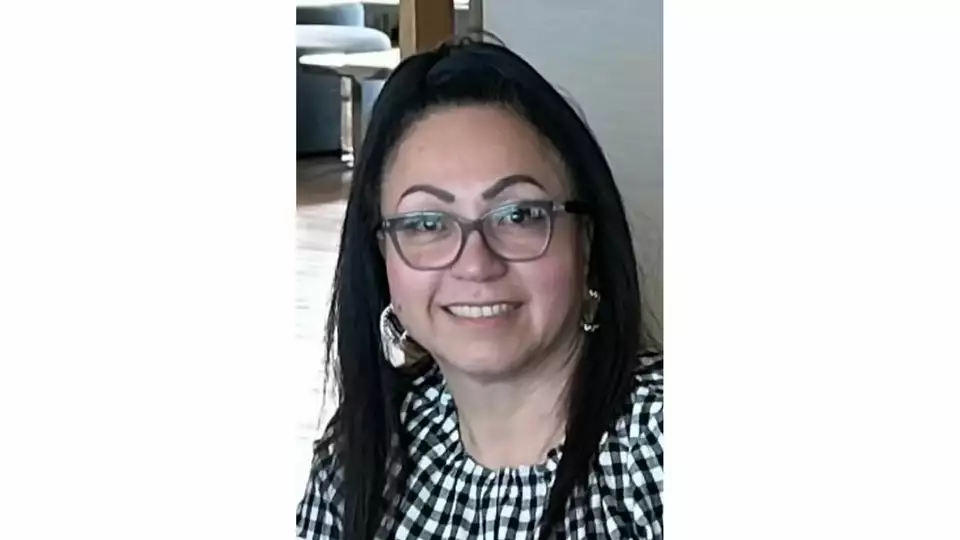
In early December 2023, a federal grand jury indicted a former civilian government worker, Janet Mello, on charges that she stole more than $100 million intended for a 4-H program for children of military families. The IRS discovered the alleged scheme and partnered with the Army to investigate, according to court documents.
Courtes of Federal court documentsJanet Mello, who’s charged with bilking the Army of more than $100 million, came to the attention of federal investigators after the IRS flagged her as a possible tax cheat, according to court filings.
Mello is accused of setting up a shell company to fraudulently collect money from a 4-H program for military families. She was a civilian Army employee at Joint Base San Antonio-Fort Sam Houston whose duties included helping administer the 4-H initiative.
She created the company, called Child Health and Youth Lifelong Development, or CHYLD, in 2016 and included it in her 2017 personal tax forms, according to a new court filing. She reported that her company earned a profit of $483 on revenue of $2,152 for training consultations.
After 2017, however, “Mello has not filed any subsequent income tax returns for CHYLD on a personal nor a business entity income tax return,” according to a forfeiture lawsuit filed by Assistant U.S. Attorney Antonio Franco Jr. in federal court Dec. 27.
The lawsuit aims to recoup more than $18 million found in bank accounts tied to Mello.
Prosecutors say Mello, 57, lived a life of opulence that far surpassed what her government salary could support. In 2022, her pay was $129,996.
With the money she allegedly stole between 2017 and 2023, Mello went on globe-trotting trips; dined at high-end restaurants; bought expensive jewelry, designer clothing and accessories; and amassed a collection of vintage and high-performance motorcycles and cars. She also bought millions of dollars worth of real estate, including several luxury condos.
SHE BOUGHT ONE OF HER LATEST PROPERTIES IN AUGUST — AN ESTATE ON 60 ACRES IN RURAL MARYLAND — WHILE SHE WAS ON TEMPORARY DUTY IN WASHINGTON, D.C., ACCORDING TO RECORDS REVIEWED BY THE SAN ANTONIO EXPRESS-NEWS.
The IRS noticed the discrepancy between her salary as a government employee and her lifestyle, and the agency started digging.
The agency’s criminal investigations division launched a joint probe with Army investigators that resulted in her indictment in early December on mail fraud and related charges.
It is one of the Army’s worst-ever theft cases.
Authorities accuse Mello of exploiting lax controls at the Army’s Installation Management Command to divert $103 million to her company instead of the 4-H program it was intended for.
Authorities could have detected her alleged theft much earlier, or even prevented it, if Army leaders hadn’t loosened the administrative reins, granting her more autonomy in her job as part of an organizational shake-up, according to court records and interviews with sources familiar with the investigation.
“It speaks to the nonchalant-ness of the command and its lack of internal controls,” said one person familiar with the investigation who requested anonymity because the person wasn’t authorized to speak to the media.
The Installation Management Command, or IMCOM, oversees the section in which Mello worked. The command, led by Lt. Gen. Omar Jones, is headquartered at Fort Sam Houston.
“The U.S. Army Installation Management Command takes the allegations in Janet Mello’s indictment seriously," Randall Robinson, executive deputy to Jones, said in a statement. "As a result of the indictment, U.S. Army Installation Management Command is conducting a review of its accounting and contracting procedures to ensure we remain good stewards of government funds."
Robinson said the Army has made several administrative improvements so far, including "increased control measures to reduce risk of fraudulent payments; increased oversight and separation of duties to reduce risk of improper action; and reduced the number of staff with signature authority to issue payments."
Loosening the reins
IMCOM, with a workforce of more than 50,000 worldwide, is a major subordinate command of the Army’s Materiel Command. Among IMCOM’s missions is to ensure facilities are fit to house and train soldiers and to oversee recreational programs for soldiers and extracurricular activities for their families, such as 4-H.
IMCOM operates a series of directorates that use the letter G and a number for designations, such as G-1 for personnel, G-6 for technology and G-8 for finance. The directorate where Mello worked, G-9, oversees programs related to family, morale, welfare and recreation initiatives.
Army records show that Josh Gwinn has been G-9’s director since April 2023. He was its deputy director from April 2018 to March 2023.
Under Gwinn are G-9 Branch Chief Kevin Montgomery and Suzanne King, chief of the G-9’s child and youth services. Both have held those positions since at least 2019.
Mello worked under them as a program manager for G-9’s child and youth services section.
The Express-News was unable to reach Gwinn or Montgomery for comment. King referred a reporter to her agency’s public affairs office for answers to his questions. The public affairs office did not answer written questions, instead referring the reporter to Army investigators.
Though court documents allege that Mello launched her scheme in 2016 and started receiving 4-H money in January 2017, the theft appeared to accelerate after 2019.
That year, as part of a reform initiative, IMCOM was moved from the direct supervision of the Army’s chief of staff at the Pentagon and became a subordinate of the Army’s Material Command at Redstone Arsenal in Alabama. In the period, Mello was given more flexibility in how she did her job, with less supervisory oversight.
The moves were intended to make the command’s operations more efficient, according to IMCOM.
As part of her duties, Mello helped run the 4-H Military Partnership Grant program. It hires contractors to provide training and curricula to the service branches so that children from military families can participate in 4-H, a network of youth groups that encourages children to undertake hands-on projects in agriculture, health, science and civic leadership.
When Mello created CHYLD in 2016, she said it provided 4-H services to military personnel and their families, but federal authorities say her company did no work and that it only received payments.
Mello allegedly took advantage of the new leeway she had in her job — as well as the trust another federal agency, the Defense Finance and Accounting Service, placed in IMCOM.
Known as DFAS, that agency oversees payments to Defense Department service members, employees and contractors.
The agency mailed more than 40 payments to CHYLD totaling $103 million, all at Mello’s request.
DFAS sent the money after receiving packets from Mello that included a document known as a standard form 1080, a voucher request for payment that indicated — though it didn’t explicitly say — that IMCOM had vetted and approved CHYLD as a vendor for the 4-H program. That allowed payment to her company to be processed without an invoice.
“According to DFAS, the normal process for the distribution of funds requires Mello’s supervisor to submit a memo to DFAS indicating an entity or potential vendor is approved to receive grant funds and lists the source of those funds,” prosecutor Franco wrote in the forfeiture lawsuit. “On all of the memos submitted by Mello’s supervisor wherein CHYLD was listed as the recipient of the funds, Mello was listed as the person to whom DFAS should direct any questions about payment authorization.”
Instead of having her supervisor, King, sign forms that needed her approval, Mello allegedly forged King’s digital signature, according to court records.
“They stove-piped the process to only one person,” said a source familiar with the investigation, referring to Army leaders. “They gave her complete carte blanche, and she found all the loopholes.”
No supervisor appears to have spot-checked Mello’s work, and Assistant U.S. Attorney Justin Simmons said in December that the Army apparently hadn’t conducted an audit of the 4-H program.
In his forfeiture lawsuit, Franco included memoranda and other documents that Mello submitted to DFAS in 2017.
One memo, dated Jan. 17, 2017, requested a check for $983,483 to be delivered by FedEx to CHYLD’s purported address in Schertz. Mello was listed as the contact person.
The memo included a copy of an email sent by a “Kathy Johnson” to Mello’s work email address; Mello described Johnson as the “financial analyst/reimbursable coordinator” at CHYLD. It also listed a phone number for Johnson.
“Based on the investigation, Kathy Johnson, the phone number, and email address appear to be fake, as no phone number or email address returns to CHYLD or Kathy Johnson,” the lawsuit said.
Franco also included Mello’s most recent request for payment, dated Aug. 14 of last year — for a check for more than $4 million, to be sent to an address in the 20700 block of U.S. 281 in Stone Oak.
Agents discovered that the company’s Schertz and Stone Oak addresses were for UPS stores that rent mailboxes.
“Based on (the) investigation, there is no evidence CHYLD has a physical address out of which it operates,” the lawsuit said.
The high life
During the investigation, agents also found that Mello picked up checks at the U.S. 281 address and deposited them at a Bank of America branch office across the highway. The lawsuit said that to conceal the source of the funds, Mello “transferred the fraud proceeds through various bank accounts she controlled.”
The forfeiture lawsuit said no legitimate income appeared to have been deposited into bank accounts tied to Mello’s company. (Her government paycheck went into a USAA bank account, separate from the CHYLD accounts, the lawsuit said.)
Agents found that between March 2022 and April 2023 alone, DFAS issued more than $61 million in payments to CHYLD.
Investigators allege that Mello spent nearly $43 million between Dec. 17, 2021, and May 31, 2023. That included $24.3 million on “retail,” $10.9 million on jewelry, $8 million on vehicles, $130,150 on airfare and $80,432 on lodging, the lawsuit said.
Prosecutors have not said whether anyone questioned her allegedly lavish spending or took such concerns to federal authorities — before the IRS began taking a closer look at Mello.
“She’s a textbook example,” said a source familiar with the investigation. “This could have been caught much, much earlier. It didn’t get caught until an outside agency figured it out.”