“The illiterate of the 21st century will not be those who cannot read and write, but those who cannot learn, unlearn, and relearn.” -Alvin Toffler

Saturday, November 28, 2020

Gender-based violence on the rise during lockdowns

DevelopmentAid news digest Gender-based violence on the rise during lockdowns


26 november 2020

By early April, over half the world’s population was living under lockdown, and women with violent partners found themselves trapped with their abusers and cut off from the support of friends and family. Within months of the outbreak starting, UN Women was warning of a Shadow Pandemic, as all types of violence against women and girls, but particularly domestic violence, intensified.

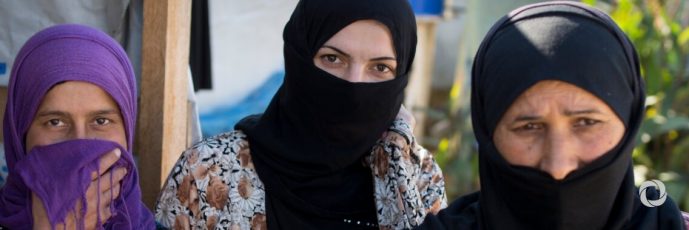
Refugee and displaced women were at greater risk from gender-based violence (GBV) even before COVID-19. The pandemic has heightened their vulnerability.

​While data has been slow to emerge, with displaced women often afraid or unable to seek help, some patterns are becoming clear. Colombia’s Ministry of Health reported a nearly 40 percent increase of GBV incidents affecting the country’s Venezuelan population between January and September of this year, compared to the same period last year.

The Global Protection Cluster – a UNHCR-led network of NGOs and UN agencies providing protection to people affected by humanitarian crises – noted in August that gender-based violence was occurring at a higher incidence in 90 percent of its operations, including in Afghanistan, Syria, and Iraq. Meanwhile, nearly three-quarters of refugee and displaced women surveyed recently by the International Rescue Committee in three regions of Africa reported an increase of GBV in their communities.

Just as levels of violence against women have risen, lockdowns and other movement restrictions have made it more difficult for survivors to report abuse and seek help. Refugee women often lack access to public health facilities and other critical social services and are reliant on services available through NGOs and UN agencies. But COVID has forced many of those services to close and in camps from Kenya to Bangladesh, humanitarian workers have been unable to visit refugees or organize prevention activities.

“In March, we realized we weren’t able to do our normal activities,” said Gabriela Cunha Ferraz, a GBV officer with the UN Refugee Agency (UNHCR) in Kakuma refugee camp in north-western Kenya. “It forced us to start thinking about different ways of reaching people.”

In many locations, this has involved a shift to online support groups and tele-counseling. In Lebanon, for example, GBV staff moved from running prevention sessions for refugee women in physical safe spaces, to running them online.

Original source: UNHCR


Friday, November 27, 2020

Communities and Community Stakeholders. Must be at the table.

Success and paradigm shift must have key individuals, groups, and communities at the table.
BEMA International

Communities are defined as having geographically-delineated boundaries—such as towns, cities, counties, neighborhoods, community districts, rural areas, and tribal regions—consisting of various populations, with the structure and ability to engage in meaningful ways with proposed research activities. A “smart and connected community” is, in turn, defined as a community that synergistically integrates intelligent technologies with the natural and built environments, including infrastructure, to improve the social, economic, and environmental well-being of those who live, work, learn, or travel within it.


Community stakeholders may include some or all of the following: residents, neighborhood or community groups, nonprofit or philanthropic organizations, businesses, as well as municipal organizations such as libraries, museums, educational institutions, public works departments, and health and social services agencies. T


$23,500,000 Grant. National Science Foundation Smart and Connected Communities

 The following grant opportunity was created, updated, or deleted on Grants.gov:
 
NSF
National Science Foundation
Smart and Connected Communities
Synopsis 1
https://www.grants.gov/web/grants/view-opportunity.html?oppId=330047


Agency Name:National Science Foundation


Description:
Communities in the United States (US) and around the world are entering a new era of transformation in which residents and their surrounding environments are increasingly connected through rapidly-changing intelligent technologies. This transformation offers great promise for improved wellbeing and prosperity but poses significant challenges at the complex intersection of technology and society. The goal of the NSF Smart and Connected Communities (S&CC) program solicitation is to accelerate the creation of the scientific and engineering foundations that will enable smart and connected communities to bring about new levels of economic opportunity and growth, safety and security, health and wellness, accessibility and inclusivity, and overall quality of life.

For the purposes of this solicitation, communities are defined as having geographically-delineated boundaries—such as towns, cities, counties, neighborhoods, community districts, rural areas, and tribal regions—consisting of various populations, with the structure and ability to engage in meaningful ways with proposed research activities. A “smart and connected community” is, in turn, defined as a community that synergistically integrates intelligent technologies with the natural and built environments, including infrastructure, to improve the social, economic, and environmental well-being of those who live, work, learn, or travel within it.

The S&CC program encourages researchers to work with community stakeholders to identify and define challenges they are facing, enabling those challenges to motivate use-inspired research questions. For this solicitation, community stakeholders may include some or all of the following: residents, neighborhood or community groups, nonprofit or philanthropic organizations, businesses, as well as municipal organizations such as libraries, museums, educational institutions, public works departments, and health and social services agencies. The S&CC program supports integrative research that addresses fundamental technological and social science dimensions of smart and connected communities and pilots solutions together with communities. Importantly, the program is interested in projects that consider the sustainability of the research outcomes beyond the life of the project, including the scalability and transferability of the proposed solutions.

This S&CC solicitation will support research projects in the following categories:
  • S&CC Integrative Research Grants (SCC-IRG) Tracks 1 and 2. Awards in this category will support fundamental integrative research that addresses technological and social science dimensions of smart and connected communities and pilots solutions together with communities. Track 1 proposals may request budgetsranging between $1,500,001 and $2,500,000, with durations of up to four years. Track 2 proposals may request budgetsup to $1,500,000, with durations of up to three years. Note that NSF is working with the Japan Science and Technology Agency (JST) to support joint US-Japan IRG Track 2 proposals (SCC-IRG JST) that address topics related to recovery from COVID-19 and future resilience planning related to pandemics and disasters, including how the proposed research will enable community adjustment to life in the new normal of a post-COVID-19 society.
  • S&CC Planning Grants (SCC-PG). Awards in this category are for capacity building to prepare project teams to propose future well-developed SCC-IRG proposals. Each of these awards will provide support for a period of one year and may be requested at a level not to exceed $150,000 for the total budget.
    • S&CC Integrative Research Grants (SCC-IRG) Tracks 1 and 2. Awards in this category will support fundamental integrative research that addresses technological and social science dimensions of smart and connected communities and pilots solutions together with communities. Track 1 proposals may request budgetsranging between $1,500,001 and $2,500,000, with durations of up to four years. Track 2 proposals may request budgetsup to $1,500,000, with durations of up to three years. Note that NSF is working with the Japan Science and Technology Agency (JST) to support joint US-Japan IRG Track 2 proposals (SCC-IRG JST) that address topics related to recovery from COVID-19 and future resilience planning related to pandemics and disasters, including how the proposed research will enable community adjustment to life in the new normal of a post-COVID-19 society.
  • S&CC Planning Grants (SCC-PG). Awards in this category are for capacity building to prepare project teams to propose future well-developed SCC-IRG proposals. Each of these awards will provide support for a period of one year and may be requested at a level not to exceed $150,000 for the total budget.
    • S&CC Planning Grants (SCC-PG). Awards in this category are for capacity building to prepare project teams to propose future well-developed SCC-IRG proposals. Each of these awards will provide support for a period of one year and may be requested at a level not to exceed $150,000 for the total budget.

Popular Posts

ARCHIVE List 2011 - Present

Search This Blog

Environmental Justice

Recovery\Homeless Shelters. U.S.