“The illiterate of the 21st century will not be those who cannot read and write, but those who cannot learn, unlearn, and relearn.” -Alvin Toffler

Monday, July 31, 2023

Environmental Public Health Mobile Apps – Session One. August 10th, 2023 at 2:00 pm ET

PEPH colleagues,

Please join us on August 10th, 2023 at 2:00 pm ET for the PEPH webinar: Environmental Public Health Mobile Apps – Session One.

In this webinar Steven Prince from the U.S. EPA Office of Research and Development and Christopher Held with MetaMedia will share their experiences developing mobile apps to improve environmental public health.


Registration is required.

For more information about the webinar including presenter bios, please refer to the webinar webpage.

This webinar is open to the public. Please feel free to share it with other interested parties.Individuals with disabilities who need accommodations to participate in this meeting should contact Justin Crane. TTY users should contact NIH Interpreting Services

Requests should be made at least 5 business days in advance of the event. 

Justin Crane
Contractor to the NIEHS

919 602-7466


Gender-Sensitive Language to use. July 2023

GNDR has worked with and supported women and girls who are affected in disaster contexts and when we invite them to participate in the different platforms, we must always use inclusive language.

We share this tool developed by UN Women, which recognizes the importance of language to fight against gender biases, and consequently promotes the use of gender-sensitive language in all contexts and on all occasions. Gender-sensitive language refers to language that places women and men on the same level and does not carry gender stereotypes.

This gender-sensitive lexicon includes around 650 terms in free consultation in Arabic, English, French, Spanish and Russian. You can consult it using the "Find a term" search engine, or in alphabetical order.

Additional resources used by UN Women to ensure gender-sensitive language are also available in the right-hand menu. These will be updated as necessary and as the use of gender-inclusive language evolves.

We hope you find it useful, best regards


Here the link

Liza Hernandez
Regional Lead for Americas and the Caribbean

Lead of the Gender Inequality Risk Driver

Saturday, July 29, 2023

Mark Your Calendar. The Week Ahead for the Department of Homeland Security    July 31 – August 4


U.S. DEPARTMENT OF HOMELAND SECURITY

Office of Public Affairs


The Week Ahead for the Department of Homeland Security    

July 31 – August 4  


Monday, July 31 


9:00 AM ET 

Cybersecurity and Infrastructure Security Agency (CISA) Director Jen Easterly will deliver remarks at the Border Gateway Protocol Public Workshop 

Media may register here 

OPEN PRESS 


Tuesday, August 1 


9:00 AM ET 

Secretary of Homeland Security Alejandro N. Mayorkas will deliver remarks at the Small and Rural Law Enforcement Executive’s Association (SRLEEA) Annual Conference 

Media may register here 

OPEN PRESS 

***Media must attend in person*** 


1:00 PM ET 

DHS Small Business Innovation Research (SBIR) Program Director Dusty Lang will deliver remarks at the virtual SBIR First Responder Showcase 

Media may register here  

OPEN PRESS 


Wednesday, August 2 


11:00 AM ET 

Chief Technology Officer, Office of the Chief Information Officer, David Larrimore will deliver keynote remarks at the Advancing Mission with AI Summit hosted by the Advanced Technology Academic Research Center (ATARC) 

Media may register here 

OPEN PRESS 


1:00 PM ET 

DHS SBIR Program Director Dusty Lang will deliver opening remarks for the virtual SBIR First Responder Showcase 

Media may register here  

OPEN PRESS 


2:00 PM ET 

S&T Program Manager Sridhar Kowdley will participate in a panel at the Association of Public Communications Officers (APCO) 2023 Conference and Expo 

Media may register here

OPEN PRESS 


Thursday, August 3 


8:45 AM CT | 10:45 ET 

CISA Deputy Director Nitin Natarajan will deliver keynote remarks at the International Cybersecurity Championship and Conference (IC3)  

Media may register here 

OPEN PRESS 


2:35 PM CT | 4:35 PM ET 

CISA Deputy Chief Learning Officer Antonio Scurlock will moderate a fireside chat on the United Arab Emirates (UAE) Cybersecurity Council’s Cyber Pulse Initiative at the International Cybersecurity Championship and Conference (IC3) 

Media may register here 

OPEN PRESS 


Friday, August 4 


Nothing to report at this time 

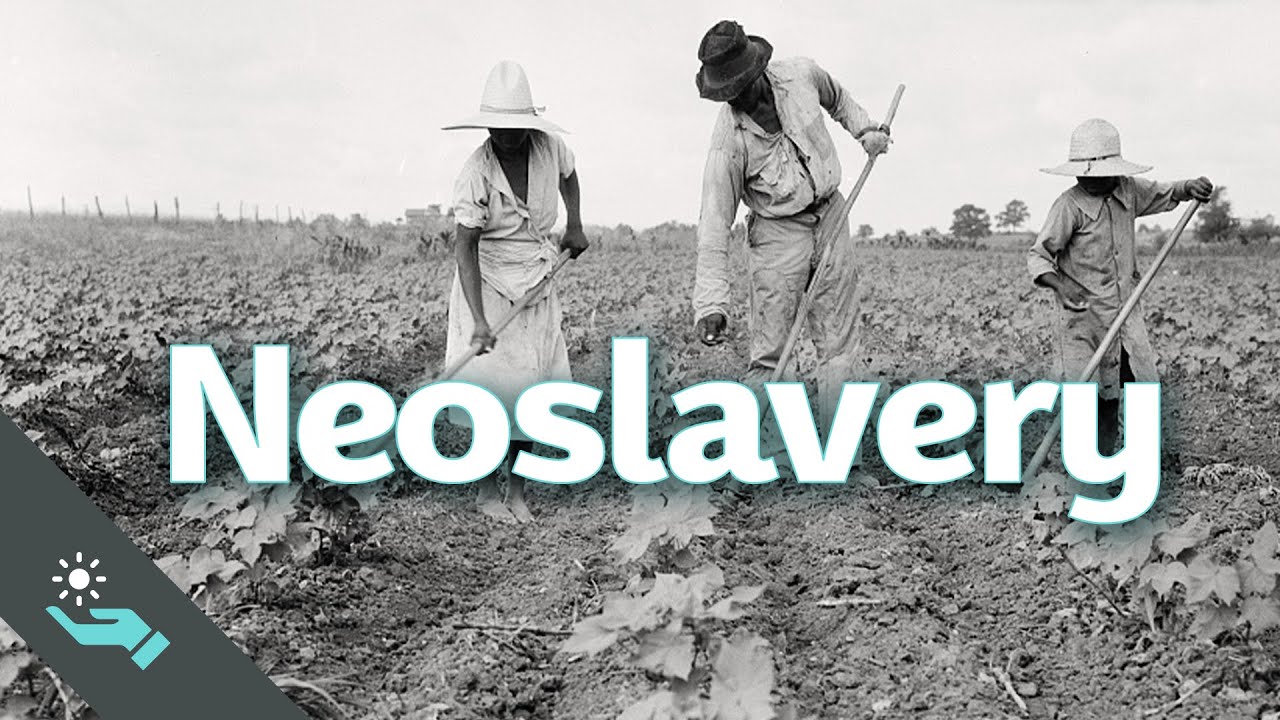
The Part of History You've Always Skipped | Neoslavery

You have to act as if it were possible to radically transform the world.

And you have to do it all the time.” —Angela Davis

https://youtu.be/j4kI2h3iotA


Posting by     Chris Z


17:01- I was born and raised in the Caribbean and I learned about slavery through the "oppressed" lens. (The total opposite to how its taught in the "oppressor" countries.) It meant exposure to a lot of facts that totally changed the paradigm. The Haitian revolution was not without its sacrifices.


France only agreed to let Haiti become independent if they paid out several hundred million francs. Haiti couldn't afford it and had to take out loans from French banks. The total amount was never paid as France "gracefully" lowered the number to 2/3 but it was still a fuck ton of money.


A French economist estimated that if France were to pay restitution, it would come up to the tune of $28 billion. That little act of greed on France's part is the reason why Haiti is so poor today- they spent out all their money to secure independence. They were a symbol of hope to the other revolutions, sure, but they paid dearly for it. Caribbean slavery really did a number on our histories.


There's a movement to demand reparations from countries that constructed their modern-day wealth on the backs of enslaved Africans suffering in the fields. Look at the tour that Kate and William did recently. They didn't receive the open arms like they expected, instead facing cold civility and a request for all the billions of dollars stolen to be repaid.

The Part of History You've Always Skipped | Neoslavery


Black Emergency Managers Association International

Washington, D.C.  20020


bEMA International

Cooperation, Collaboration, Communication, Coordination, Community engagement, and  Partnering (C5&P)


A 501 (c) 3 organization


“You have to act as if it were possible to radically transform the world. And you have to do it all the time.” —Angela Davis


The Roots of Slavery. The Past, the Present, the Future.


Handcuffs
The Roots of Slavery

The term slave has its origins in the word slav. The slavs, who inhabited a large part of Eastern Europe, were taken as slaves by the Muslims of Spain during the ninth century AD.

Slavery can broadly be described as the ownership, buying and selling of human beings for the purpose of forced and unpaid labour. It is an ancient practice, mentioned in both the Bible and the Koran.

As for those of your slaves which wish to buy their liberty, free them if you find in them any promise and bestow on them a part of the riches which God has given you.
Koran, Chapter 24, Verse 32.

Knowing that whatsoever good thing any man doeth, the same shall he receive of the Lord, whether he be bond or free.
Old Testament, Ephesians 6, Chapter 6, Verse 8.

Indeed, the main religious texts of Judaism, Islam and Christianity all recognise slaves as a separate class of people in society. Going back further in time the Mayans and Aztecs kept slaves in the Americas, as did the Sumerians and Babylonians in the Near East. The Egyptians employed huge numbers of slaves, including the Jews, Europeans and Ethiopians.

The Greeks and Romans kept slaves as soldiers, servants, labourers and even civil servants. The Romans captured slaves from what is now Britain, France and Germany. Slave armies were kept by the Ottomans and Egyptians.

In Imperial Russia in the first half of the 19th century one third of the population were serfs, who like slaves in the Americas, had the status of chattels and could be bought and sold. They were finally freed in 1861 by Emperor Alexander II. Four years later slavery was abolished in the southern states of America following southern defeat in the American Civil War.

In Africa there were a number of societies and kingdoms which kept slaves, before there was any regular commercial contact with Europeans, including the Asanti, the Kings of Bonny and Dahomey.


Popular Posts

ARCHIVE List 2011 - Present

Search This Blog

Environmental Justice

Recovery\Homeless Shelters. U.S.