2 A work/rest cycle is a pattern of alternating work and rest based on an assessment of risk. The proportions of work and rest will vary – more and longer periods of rest/recovery are necessary as risks increase.


2 A work/rest cycle is a pattern of alternating work and rest based on an assessment of risk. The proportions of work and rest will vary – more and longer periods of rest/recovery are necessary as risks increase.
The Community Disaster Resilience Zones Act of 2022 was signed
into law by President Joseph R. Biden on Dec. 20, 2022. The act builds disaster
resilience across the nation by creating and designating resilience zones that
can focus assistance and support to areas that need it most.
These zones are
disadvantaged communities that have high natural hazard risks based on combined
risks of annualized estimated losses to buildings, people and agriculture from
natural hazards; social vulnerability; and community resilience.
The designations
will also enable jurisdictions to strengthen their community resilience by
working with a range of federal agencies, private sector, nonprofit and
philanthropic organizations, and private equity partners.
Community Disaster Resilience Zones
Designations
On Sept. 6, FEMA
is announcing 483 census tracts in communities that will receive targeted
federal support to become more resilient to natural hazards and extreme weather
worsened by the climate crisis. FEMA will use these zones to focus resilience
activities as well as to encourage other federal agencies, the private sector,
nonprofit and philanthropic organizations, and private equity to invest in
resilience projects.
FEMA is
authorized to provide additional assistance for mitigation projects that reduce
natural hazard risk in, or primarily benefiting, a designated zone, including a
cost share adjustment under certain FEMA mitigation grant programs.
Designation Requirements and Process
FEMA consulted
with other federal agencies, supporters and contributors from the public and private
sectors, and the general public to refine the methodology for designating these
initial resilience zones.
With the
legislation as guidance, individual census tracts with the highest natural
hazard risk assessment as determined by components of the National Risk Index
are eligible for designation. The law requires the following:
The White House
Council on Environmental Quality Climate and Economic Justice Screening Tool was used for these designations as well. This
tool is a geospatial platform that identifies areas across the nation that face
especially acute climate and other resilience burdens. FEMA’s use of this tool
further focused the designations on underserved communities.
Designations
will focus resilience building activities as well as to encourage other federal
agencies, the private sector, nonprofits, philanthropic and private equity to
invest in projects to make identified communities more resilient.
For example, the
National Oceanic and Atmospheric Administration (NOAA)
plans to use these newly designated zones to focus a number of its climate
resilience programs. NOAA will make an award this fall for the Climate-Smart Communities Initiative program funded by the Inflation Reduction Act to accelerate the pace of and reduce the cost of climate
resilience-building for communities across the United States. The program will
work with communities to co-develop equitable climate resilience plans that can
be readied for funding and implementation. NOAA’s priority is to assist
communities that are at the highest risk to climate impacts and have the most
need for assistance, such as the FEMA identified Community Disaster Resilience
Zones.
The Initial Designations Announcement on
September 6
The initial
announcement of designations is for all 50 states and the District of Columbia.
FEMA will make a second announcement in the fall of 2023 for tribal lands. For
the tribal land designations, FEMA will consider input received through a
Tribal Consultation conducted on Aug.2, 2023. The open comment period for the Tribal Consultation
closed on Sept. 5, 2023.
A third
designation of zones will occur in 12-18 months based on updates to the
National Risk Index, lessons learned from this initial experience, and
stakeholder input. Examples of planned updates to the National Risk Index include
additional data on tsunami and riverine flood risk.
FEMA will
continue to engage the public as it refines the natural hazard risk assessment
methodology to designate the zones, consults with local jurisdictions, and
implements post-designation support from a range of public and private
resources.
The agency
ensured that each state has at least one Community Disaster Resilience Zone and
considered geographical balance among coastal, inland, urban, suburban, and
rural areas when designating the zones. Future designations will continue to
build upon the geographic diversity.
J.D. Power surveyed more than 5,500 homeowners insurance policyholders regarding claims service and 11,630 about their insurance experience overall. Erie Insurance is No. 1 for claims satisfaction in 2023.
J.D. Power’s 2023 Property Claims Satisfaction study places Erie Insurance, Amica and Nationwide as the top three best insurance companies for home insurance claims. Automobile Club of Southern California (AAA) and Homesite are the bottom two companies in the research firm’s claims rankings for this year.
The overall home insurance satisfaction survey, last released in the fall of 2022, ranked Amica as the best home insurance company, followed by American Family and The Hartford. Farmers and Homesite landed in the bottom two.
For the claims survey, J.D. Power asked 5,343 homeowners insurance policyholders how they felt about recent claims experience in key areas, including the final settlement, interaction with representatives, and the estimate and repair process. J.D. Power releases its claims satisfaction survey annually in February.
The larger overall home insurance study surveyed 11,630 homeowners on five factors: interaction, policy offerings, price, billing process and policy information, and claims. J.D. Power releases its overall satisfaction survey annually in September, so 2023 results are not yet available.
Amica regularly tops J.D. Power’s rankings for both homeowners insurance satisfaction overall and for claims, and took the top spot in both surveys in 2022, although it tied with The Hartford in the overall score. Erie Insurance bumped Amica out of first place in the 2023 claims survey.
Read on to learn how the top insurance companies ranked and what affected claims satisfaction in 2023, and take a look at the overall satisfaction scores for 2022 ahead of the new survey.
Key takeaways
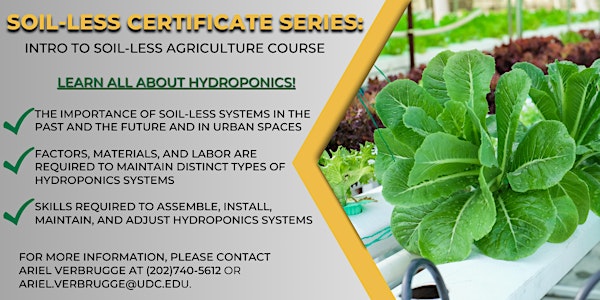
This hybrid, soilless certificate series is for beginner or urban farmers who are interested in operating hydroponic and aquaponic systems
Course Description:
This hybrid course helps train individuals to understand the importance of materials, construction, maintenance, and products utilized to create and farm a successful hydroponics system in various ways.
Instructor: Ariel Verbrugge
Overall Instruction Time:
10 hours Online Lecture via Zoom
8 hours In-person at Firebird Farm
Cost: FREE
Deadline for Registration: Wednesday, September 27th
Schedule:
Introduction Virtual Lecture – Monday, October 2nd from 2 pm - 4 pm
Seeding In-person – Thursday, October 5th from 2 pm - 4 pm
Types of Soil-less Systems Virtual Lecture – Monday, October 9th from 2 pm - 4 pm
Constructing NFT System In-person – Thursday, October 12th from 2 pm - 4 pm
Water Quality Virtual Lecture – Monday, October 16th from 2 pm - 4 pm
Transplanting In-person – Thursday, October 19th from 2 pm - 4 pm
System Design Virtual Lecture – Monday, October 23rd from 2 pm - 4 pm
Harvesting In-person – Thursday, October 26th from 2 pm - 4 pm
Soil-less Farming and Conclusion Virtual Lecture – Monday, October 30th from 2 pm - 4 pm
WHO IS THIS FOR?
Beginner and/or urban farmers who are interested in operating hydroponics systems, New farmers/gardeners, and DMV Residents interested in new agricultural techniques.
WHAT WILL YOU LEARN?
Farmers will learn:
The importance of soil-less systems in the past as well as for the future and in urban spaces
What factors, materials, and labor are required to maintain distinct types of hydroponics systems
The skills required to assemble, install, maintain, and adjust hydroponics systems
For more information, please contact Ariel Verbrugge at Ariel.Verbrugge@udc.edu.
Volunteer with CAUSES
Ready to discover the rewards of hydroponic volunteer opportunities? See here.
Connect with CAUSES
To receive insightful information on CAUSES’ news updates, upcoming virtual events, and specialized programming, please sign up here. Connect with us on social below!
Learn
more about USDA OIG Office of
Investigations
Recent Audit Reports
USDA's Compliance with Binding Operational Directives
19-02 and 22-01
The
Office of Inspector General evaluated and tested USDA’s compliance with the
requirements of Binding Operational Directives 19-02 and 22-01. National Organic Program - Strengthening Organic
Enforcement
This
informational report details control activities implemented to strengthen
enforcement of the USDA organic regulations and explains how the Agricultural
Marketing Service intends to measure the effectiveness of the new organic
regulations. Food Purchase and Distribution Program
We
reviewed Agricultural Marketing Service's (AMS) controls over the Food
Purchase and Distribution Program (FPDP) and determined whether AMS purchased
the type and quantity of commodities necessary to mitigate the impact from
retaliatory tariffs. COVID-19—Farmers to Families Food Box Program
Administration
In
our final report, we assessed the controls Agricultural Marketing Service
developed and implemented to ensure awardees fulfilled the obligations of
their contracts.
Join Our Team
Help us make a difference. The USDA Office of Inspector
General seeks individuals whose abilities and efforts will make meaningful
contributions to the interests and concerns of the public.
|