|
|||||||||||||||||||||||||||||||||||||

Sunday, May 7, 2017
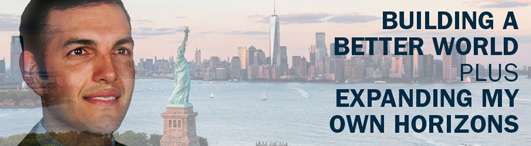
May 2017. Dept. of State. Pathways Internship Experience Program


Saturday, May 6, 2017
A Black, Woman Owned Business. Let's drink and eat well.
Water Security....
A Black, woman owned business and a new friend of
BEMA International
BEMA International
Distributor Opportunities available, NOW. Let's get our communities covered drinking and eating well.
Charles D Sharp CEO BEMA International

Friday, May 5, 2017
Haiti 2017. Reflections. The richest families. The 2%
http://www.haitiobserver.com/blog/the-richest-families-in-haiti.html

The Richest Families In Haiti
Sunday, October 28, 2012 10:13 PM
Despite Haiti being the poorest of poor countries, it has a percentage of very rich elite who control the economy and the governance of the country.
In such a difficult social economic environment, the few wealthy families live in a class of their own; tiered, Malibu-style homes above in the hills of Port-au-Prince.
In the 1980's reports show that the upper class in Haiti constituted of 2 percent of the total population. However, the 2 percent controlled about 44 percent of the total national income.
Though the elite percentage is small it has the biggest share of the economy. The top six richest families in Haiti are: Madsen, Brandt, Lacombe, Gardere, Mevs and Bigio.
These families are by large of foreign origin. The Mevs and Brandts are originally Jamaicans who immigrated to Haiti. The Biggios came from the Middle Eastern while the Madsens are rooted in Denmark.
They have prospered mightily under the dictatorial leadership of President Francois "Papa Doc" Duvalier. There were monopolies on food and other essential items during the regime. Those who were connected to the president won the most lucrative opportunities.
Easy access to education is what has enabled some of the rich individuals climb the ranks of the upper class. Others have been able to accrue wealth through the industries and export-import businesses
A statement by an expatriate journalist in Haiti who has studied these families closely reported, "In terms of assets, they are very, very, very rich - very rich. In Haiti, and outside of Haiti" . Critics claim that these notoriously wealthy families do not value democracy in politics or in economic matters.
The families have been linked with the facilitation of the coup d'etat that ousted Haiti's elected president, Jean-Bertrand Aristide in 2004.
Subscribe to:
Posts (Atom)
Popular Posts
-
Water one of the most abundant resources on Earth poses risk and vulnerabilities across the globe. Health and Well-Being. REA...
-
Crisis\disaster\emergency event funding opportunities ‘ highlighted ’. BEMA International 11th Hour Racing (...
-
Why get a new smartphone when it may only be a matter of clearing and transferring files to your tablet, laptop, or PC. Backup and storing p...


Environmental Justice

Recovery\Homeless Shelters. U.S.