|

Thursday, June 18, 2020
ONLINE. COVID-19 Training for Health Workers: Preparedness and Response. DisasterReady June 2020


Wednesday, June 17, 2020
Cherry Pick as much as you like. You may not have the full formula for the solution.
cherry-picked; cherry-picking; cherry-picks
Definition of cherry-pick
: to select the best or most desirable
: to select as being the best or most desirablealso : to select the best or most desirable fromcherry-picked the art collection
VOTE....Healthy Voting Guides June 2020
|
Public Health
Officials and Voting Experts Release First-Ever Healthy Voting Guides
|
|
2020 is an election year, and we
need to make sure our elections are safe, secure, and successful.
That's why
NACCHO partnered with the nonpartisan We Can Vote coalition to help launch
the country's first-ever Healthy Voting guides to provide up-to-date
information to voters on how to safely participate in this year's elections.
Check out the Healthy Voting guide for your state, and share it with
your friends, family, and community. Together, we can help make sure every
eligible voter is able to safely register, vote, and have their voices heard.
|
COVID-19 & Race. June 2020
|
|
||||
|


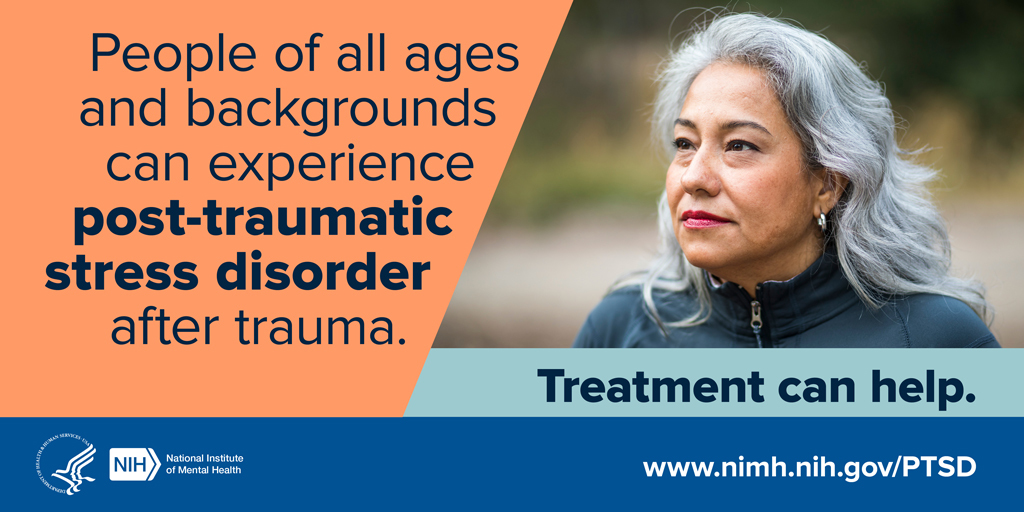
PTSD Awareness Month June 2020
PTSD Awareness Month
Post-traumatic
stress disorder (PTSD) is a disorder that develops in some people who have
experienced a shocking, scary, or dangerous event. Anyone can develop PTSD at
any age. This includes children, teens, and adults who have been through a
physical or sexual assault, abuse, accident, disaster, or other serious events.
During PTSD Awareness Month, learn the signs, symptoms, and treatments.
COVID-19 COMMUNITY RESOURCES. June 2020
COVID-19 COMMUNITY RESOURCES
This guide contains federal, state, and local information to keep you and your family safe.
You can find the most updated version here.
Urban Resilience webinar series: #7 WEBINAR: Tools and methods for climate action plans and transformative participation.
Please, join next webinar from our Urban Resilience webinar series: #7 WEBINAR: Tools and methods for climate action plans and transformative participation.
The 7th webinar
"Tools and methods for climate action plans and transformative
participation " aims at presenting and discussing three different
tools/approaches to enhance urban resilience at local level through capacity
building and action plans.
Climate Technology Centre and Network / Anthesis
Lavola will focus on conducting diagnosis of vulnerability to climate change
and developing energy and climate action plans; Adapt-Chile will address the
value of ludic approaches for enhancing participation, specifically in groups
where hierarchies may limit interaction; UN-Habitat will present the CityRAP tool
for training city managers and municipal technicians to understand and plan
actions aimed at reducing risk and building resilience through the elaboration
of a City Resilience Action Plan.
18 June, 09:30 AM
– 11:30 AM CET
Please connect
10-15 minutes before
#7 WEBINAR: https://lnkd.in/g65GNas
Registration: https://lnkd.in/g-VYP8N
WEBINAR SERIES: https://lnkd.in/gunbwEm
Recording: https://lnkd.in/g8ZacWV
Panelists:
- Fruzsina
Straus, Human Settlements Officer, UN-Habitat Regional Office for Africa,
Nairobi, Kenya
- Selene
Angelone, Urban Resilience Programme Specialist UN-Habitat Regional Office for
Africa, Nairobi, Kenya
- Nadège
Trocellier, Head of Climate Change Anthesis Group
- Cristóbal
Reveco Umaña, Founder and International director (non-executive) Asociación
Adapt-Chile, PhD candidiate, Climate Service Centre Germany (GERICS)
Moderator:
- Ash Carl,
Director, Department of Urban Resilience Asian Disaster Preparedness Centre
(ADPC)
|
||||||
|
||||||
Recommendations for Improving National Nurse Preparedness for Pandemic Response: Early Lessons From COVID-19. June 2020
Recommendations for Improving National Nurse Preparedness for Pandemic
Response: Early Lessons From COVID-19
This report describes myriad factors that influence nursing workforce
development and training for pandemic response as well as the safety and
support needed during pandemics at the government, system, organization, and
individual levels. Also identified are some of the relevant stakeholders who
can influence decision making at these levels. The report identifies gaps and
proposes short- and long-term recommendations for ways to improve the
readiness, safety, and support of the national nursing workforce for COVID-19
and future pandemics.Flashback: Emergency Management: The State of Preparedness
By Kay C. Goss
The United States has built a solid foundation for emergency
preparedness, which is based on the whole community concept of bringing
together all levels of government, the private and nonprofit sectors, and the
public. However, this 2016 article reminds communities that they must continue
to work together and build strong leaders in order for the nation to withstand
the many natural and human-caused incidents that may occur.Flashback: Preparing the Next Generation of Emergency Service Leaders
|
By Anthony S. Mangeri
In a world where disasters and other emergency incidents occur
every day, emergency service leaders are responsible for bringing calm and
structure in the midst of crisis. Some of these leaders will begin this path
as early as high school, while others will migrate to the emergency services
as their roles and responsibilities change. As this 2013 article emphasizes,
education is key for building strong leaders that can successfully tackle any
future disaster.
|
Systems Failure: Comfort Zone. Reactionary Approaches Built in System
When diversity &
inclusion are designed in your platform, there is no need to be reactionary
when a crisis arises.
In your annual corporate,
or expense account budget for membership in professional associations who do
you support?
Your Comfort Zone. Which do you feel comfortable supporting with
an annual membership payment?
By July 2020 the dust shall settle and we shall return to
business as usual.
BEMA International
The meaning of BEMA
be·ma
/ˈbēmə/
noun
1. the altar part or
sanctuary in ancient and Orthodox churches.
o the podium or
platform in a synagogue from which the Torah and Prophets are read.
noun: bimah;
plural noun: bimahs; noun: bima; plural noun: bimas
o HISTORICAL
the platform from
which orators spoke in ancient Athens.
|
Black Emergency Managers Association
International
Mission & Vision
|
MISSION
Provide information, networking, educational &
professional development opportunities, and to advance the emergency
management and homeland security profession within Black, Latino,
African-Descent, disenfranchised, and vulnerable population communities.
To assist and ensure diversity and
community involvement in all phases of emergency management, and climate change to
include grant opportunities, training, preparedness, etc. with emphasis on
the long-term recovery of communities.
|
VISION
Premier
association of African-Descent Homeland
Security & Emergency Management professional emergency managers. Be the
premier African-Descent 'all-inclusive' association
fulfilling our primary mission, and not exclude any individual,
entity, or organization with an interest in the principles of
emergency management in all communities.
BEMA’s commitment
to diversity by being open and inclusive as we leverage the
strength found in the rich diversity of our membership and interactions with
all communities. Our inclusive culture extends to valuing diversity of
thinking, backgrounds, experiences and culture. This allows us to work
locally with others across all borders to develop and deliver lifesaving
services to communities.
Diversity
Vision:
Fully
embrace and promote inclusion across all divisions separating people, and
communities.
Diversity
Defined:
Diversity
in its broadest sense encompasses all the characteristics, experiences and
cultural influences that make each of us unique individuals.
The
differences and similarities can be categorized into several different
dimensions:
Internal – those we’re
born with like gender and ethnicity;
External – those which
change over time like age; and
Situational – characteristics
that change based upon life choices, such as marital status and vocation.
|
IAEM
News Release. Reaction to a Crisis
News Release
Leslie Luke Appointed IAEM-USA
Diversity and Equity Advisor
June 16, 2020 (Falls Church, Va.) – Today, IAEM-USA President Teri
Smith, CEM, CPM, appointed Leslie Luke, deputy director of the Los Angeles
County Chief Executive Office, Office of Emergency Management, as IAEM-USA
diversity and equity advisor. The IAEM-USA Board of Directors approved the
appointment during its meeting held today. Mr. Luke is the current chair of
IAEM-USA’s Diversity Committee, which formed in 2011.As an association that values diversity, the International Association of Emergency Managers (IAEM) is committed to equality and justice. The Diversity Committee recently issued a statement that provided actions necessary to lead the organization and our members’ organizations to social equity. The new IAEM advisory position further elevates the importance of diversity and equity throughout IAEM programs. “As a board, we play a critical role in creating an organization that prioritizes, supports, and invests in diversity, inclusion, and equity,” stated IAEM-USA President Teri Smith, CEM, CPM. “We believe that we are better able to do this work effectively and with authenticity by having a diversity and equity advisor who advises the president, executive director, and board members on equity and diversity issues. The new advisor will suggest ways to promote diversity and develop a welcoming and inclusive organizational climate.” “Today’s decision by the board to add a diversity and equity advisor demonstrates the board’s commitment to making their processes, discussions and decision-making more inclusive, open and representative of the membership,” said Mr. Luke. “Strategically and operationally a board that is open to change and embraces diversity leads from a position of strength and sets itself up for future success and growth.” Mr. Luke joined Los Angeles County in 2013 after spending 25 years in San Diego County where ten of those years were with their Office of Emergency Services. He has been the Recovery Operational Area lead for seven federally declared disasters and numerous State of California declared disasters. He was a member of the FEMA Innovation Team and responded twice following Superstorm Sandy. Throughout his career, Mr. Luke has served on and participated with numerous Department of Homeland Security and Federal Emergency Management Agency (FEMA) Task Forces, projects and initiatives. He has worked closely with the California Office of Emergency Services on various statewide initiatives. He is a member of the California Emergency Services Association (CESA), a member of the CESA Legislative Committee, and past vice chair of IAEM Region 9. Mr. Luke holds a bachelor’s degree from the Union Institute and University. He is a graduate of the Harvard Kennedy School and Harvard School of Public Health National Preparedness Leadership Initiative, and the FEMA National Disaster Recovery Leadership Academy. IAEM-USA, the nation’s largest emergency management professional association, is a non-profit professional organization representing more than 5,000 emergency management and homeland security professionals for local communities, state and federal disaster officials, private sector, non-governmental organizations and others involved in preparing for, responding to, and recovering from all types of disasters including acts of terrorism. IAEM provides: access to the largest network of emergency management experts who can provide advice and assistance; the Certified Emergency Manager program; annual scholarships; a comprehensive monthly newsletter; and more.
###
|
Beginning June 22, there will be a five-day HURREVAC webinar serie
FEMA Holds HURREVAC Webinar Series
Beginning June 22, there will be
a five-day HURREVAC webinar
series that includes training sessions each day at 2 p.m. ET. HURREVAC is
the decision support tool of the National Hurricane Program administered by
FEMA, the USACE and the NOAA National Hurricane Center. Sign up to participate
in each day's live session, or visit the HURREVAC website
to watch recordings of the sessions after they have ended.
·
June 22: Day 1 Registration
Intro to web-based HURREVAC and general overview of the program.
Intro to web-based HURREVAC and general overview of the program.
·
June 23: Day 2 registration
Wind forecast features and tools to support understanding of potential wind timing and intensity.
Wind forecast features and tools to support understanding of potential wind timing and intensity.
·
June 24: Day 3 registration
Evacuation timing features and tools to support evacuation decisions.
Evacuation timing features and tools to support evacuation decisions.
·
June 25: Day 4 registration
Storm surge and other program tools.
Storm surge and other program tools.
·
June 26: Day 5 registration
Using HURREVAC to answer scenario-based questions.
Using HURREVAC to answer scenario-based questions.
The application period closes 5 p.m. ET on July 15. Applications for Regional Catastrophic Preparedness Grants
FEMA Accepts Applications for Regional
Catastrophic Preparedness Grants
FEMA released the Notice of
Funding Opportunity for $10 million in funding for the Regional
Catastrophic Preparedness Grant Program. Changes to the 2020 funding
include a program objective to address regional pandemic preparedness with
specific focus on pandemic planning activities.
The application period closes 5
p.m. ET on July 15. Submissions must be made through Grants.gov.
The funding notice and additional information is available on the FEMA website as well as on Grants.gov, under Assistance Listings Number 97.111.
Food Security: Agri-Pulse NTCA CEO Shirley Bloomfield NTCA-The Rural Broadband Association
NTCA CEO Shirley
Bloomfield
NTCA-The Rural Broadband
Association
This week’s Open Mic
guest is Shirley Bloomfield, CEO of NTCA-The Rural Broadband Association. The
COVID-19 pandemic has painfully exposed the “Rural Divide” between those who
enjoy adequate internet service and those who suffer from a lack of
connectivity. In recent testimony before Congress, Bloomfield advocated for
developing a national infrastructure to meet the needs of the day and capturing
opportunities of tomorrow. Bloomfield says it is important for government
agencies to coordinate efforts in developing and maintaining rural service and
says the time is now to take action to provide this essential service to all
Americans.
National Latino
Farmers & Ranchers Trade Association
1029 Vermont
Avenue, NW, Suite 601
Washington, DC
20005
Office: (202)
628-8833
Fax No.: (202)
393-1816
Email: latinofarmers@live.com
Twitter: @NLFRTA
Website: www.NLFRTA.org
Subscribe to:
Comments (Atom)
Popular Posts
-
https://optiongray.com/ham-vs-satellite-phones/ Off-Grid Communications – HAM Radio vs. Satellite Phones Written by Option Gray i...
-
https://www.differencebetween.com/difference-between-anthropocentrism-biocentrism-and-ecocentrism/ Difference Between Anthropocentrism Bi...
-
With the return of our military members from overseas duty, or military members retiring, or leaving the ranks. Many will be applying for f...


Environmental Justice

Recovery\Homeless Shelters. U.S.