The natural flora of the mouth and
the bowel has bacterial concentrations up to 10^10 per ml and are significant
reservoirs of nosocomial or hospital pathogens. In hospitalised patients, the
skin may become colonised with multidrug resistant (MDR) pathogens, and
infected wounds and other lesions are also potential sources of
cross-infecting organisms.
Pathogenic organisms from colonized and infected
patients (and sometimes from the environment) transiently contaminate the
hands of staff during normal clinical activities and can then be transferred
to other patients. Hand transmission is one of the most important methods of
spread of infectious agents in health care facilities. Proper hand hygiene is
an effective method for preventing the transfer of microbes between staff and
patients.
The microbial flora of the skin
consists of resident and transient microorganisms. Resident organisms (e.g.,
coagulase negative staphylococci, diphtheroids) survive and multiply in the
superficial skin layers. The transient microbial flora of the skin consists
of recent contaminants that survive only for a limited period of time. These
microorganisms (e.g., S. aureus, E. coli,
enterococci) may be acquired by contact with the normal flora or colonised or
infected sites of the patient or from the inanimate hospital environment. If
the skin of staff members' hands is damaged, the bacterial count on the skin
becomes higher. There is also a risk for colonisation with bacteria not
normally belonging to the hand flora.
Three levels of decontamination of
hands are recognized.
Social handwashing with plain soap and water removes most transient
microorganisms from moderately soiled hands.
Hygienic handwashing or
disinfection is a
procedure where an antiseptic detergent preparation is used for washing or
hands are disinfected with alcohol (alcoholic rub). This is a more effective
method to remove and kill transient microorganisms.
The distinction between the need
for social handwashing and hygienic hand washing may not always be clear. A
thorough social hand wash may be appropriate if disinfectants are not
available.
Surgical handwashing is performed with the aim of removing and killing the
transient flora and decreasing the resident flora in order to reduce the risk
of wound contamination if surgical gloves become damaged. Agents are the same
as for the hygienic hand wash.
before caring for susceptible
patients (such as the immunocompromised)
before and after touching
wounds, urethral catheters, and other indwelling devices
before and after wearing
gloves
after contact with blood
secretions or else following situations in which microbial contamination
is likely to have occurred
after contact with a patient
known to be colonised with a significant nosocomial pathogen (such as MRSA,
MDRKlebsiella)
An alcoholic hand rub, ideally
from a dispenser at the patient's bedside is the most efficient and least
time consuming procedure for hand decontamination.
Surgical handwashing
before all surgical
procedures
Methods
Watches and rings reduce hand
washing/disinfection effectiveness and should be removed during hand hygiene.
Some suggest that they not be worn in patient care.
Social hand washing
In social hand washing, vigorous
and mechanical friction is applied to all surfaces of lathered hands using
plain soap and water for at least 10 seconds using a defined technique (Fig.
4.1). The hands are rinsed under a stream of water and dried with
paper towel. In the absence of running water, a clean bowl of water
should be used. The bowl should be cleaned and water changed between each
use. Alternatively, a drum with a drain spout could be elevated to serve as
running water. Similarly, in the absence of paper towels, a small clean cloth
could be used, but the towel should not be used for extended communal use and
should be discarded after each use into a bag designated for laundering and
reuse.
In places where there is frequent
disruption of water supply, water should be stored in large receptacles
whenever water is available. The water should be free from infectious agents.
Recommended hand
wash agents
Hygienic hand washing/disinfection
Aqueous
4% chlorhexidine
gluconate/detergent solution
Povidone - iodine/detergent
solution containing 0.75% available iodine
Wet hands with clean (running)
water or, if not available, from water in a bowl. Apply cleanser (3-5 ml)
depending on the product or thoroughly lather with soap. Wash the hands
for 10-15 seconds, applying friction over all hand surfaces, rinse and dry as
described above.
Alcoholic
0.5% chlorhexidine or
povidone-iodine in 70% isopropanol or ethanol
60% isopropanol or 70%
ethanol without antiseptic
Apply not less than 3ml of the
preparation to the hands and rub to dryness (approximately 30 seconds).
Alcohol is more effective than aqueous antiseptic solutions, but a
preliminary wash may be needed for physically soiled hands. Alcohol is an
effective alternative when there is no water or towels readily available and
there is need for rapid hand disinfection. Alcohol products with emollients
added will cause less skin irritation and drying to hands (1-3% glycerol).
Surgical hand washing/disinfection
Agents for surgical hand washing
are the same as for the hygienic hand wash. The difference is the time of
scrub that is increased to 2-3 min and should include wrists and forearms. If
an alcoholic preparation is used, two applications of 5ml each rubbed to
dryness are suggested.
Sterile disposable or
autoclavable nailbrushes may be used to clean the fingernails only, but
not to scrub the hands.
A brush should only be used
for the first scrub of the day.
After hand washing with soap
and water, a hand rub with an alcoholic base formulation (70%) should be
used if possible. This enhances the destruction or inhibition of
resident skin flora.
Sterile towels should be used
to dry the hands thoroughly after washing and before alcohol is applied.
Important Points to
Note
When bar soap is in use, it
should be kept dry to prevent contamination with microorganisms that
grow in moist conditions.
Liquid soap dispensers should
be regularly cleaned and maintained.
Gloves should not be regarded
as a substitute for hand hygiene. A glove is not always a complete
impermeable barrier (20-30% of surgical gloves are punctured during
surgery). However, gloves reduce very substantially the number of
microorganisms being transferred to the patient or to the HCW who is
wearing the gloves. Gloves also provide some protection against the
transmission of blood-borne viruses.
In an epidemic situation,
hand hygiene and the use of gloves are important protective measures to
prevent the transmission of infectious agents to susceptible patients or
staff. The same glove must not be worn from one patient to another
patient, or between clean and dirty procedures on the same patient.
An alcoholic rub or hand wash
should be performed after removing gloves and before sterile gloves are
worn.
In areas where gloves are not
readily available, latex gloves can be washed with soap and water, dried,
powdered, sterilized or high level disinfected and reused. Sterilisation is
preferable for surgical procedures.
Minimal requirements
Watches and rings reduce hand
washing effectiveness and should be removed.
Wash hands with soap and
water and dry thoroughly with a clean towel at the start of a clinical
shift or if hands become grossly soiled.
Decontaminate hands with a
hand disinfectant or alcoholic rinse or rub between each patient
contact.
Perform a surgical scrub
before each operation.
Wear gloves as necessary to
reduce transfer of organisms to patient and to reduce transmission of
blood borne viruses.
Bibliography
Standard principles for
preventing hospital-acquired infections. Journal of Hospital
Infection 2001;47(Suppl):S21-S37.
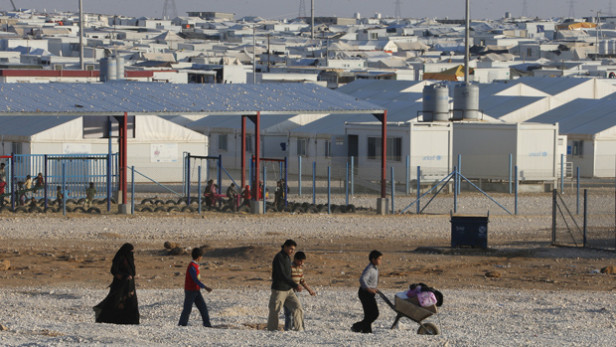
A view of the Zaatari refugee camp in Jordan, where many Syrian refugees are staying. A new report by the Médecins Sans Frontières highlights areas where emergency response need improvement. Photo by:Mohamed Azakir / World Bank / CC BY-NC-ND
International aid organizations are not responding to humanitarian emergencies as well as they should because they put more emphasis on reporting results and fundraising than actual development work, according to French medical group Médecins Sans Frontières.
MSF — with a long history of criticizing the U.N. for its role in such situations — said in a new report published on Monday that humanitarian work on the ground “has been undervalued and under-prioritized” in favor of avoiding risks and securing funding for current and future programs in countries like the Democratic Republic of the Congo, South Sudan and Syria.
That’s why the humanitarian response to the crises in these conflict-ridden nations lacks the technical capacity that well-funded top international NGOs in theory should be able to deploy, the survey adds. The report also accused organizations of leaning heavily toward “easier projects” when faced with logistical or access difficulties.
And — as expected — the French medical group singled out the United Nations.
"The current U.N. system inhibits good decision-making, in particular in displacement crises where a number of UN agencies have a responsibility to respond," Joanne Liu, MSF's outspoken international president, noted in the report, while co-author Sandrine Tiller defined the way the world body works in these countries as “just a chain of subcontracts" that passes on the responsibility from U.N. agencies to an implementing iNGO, then a local NGO, “and at the end, there's no one in the field.”
It’s not uncommon for such grave humanitarian emergencies as those in the DRC, South Sudan or Syria to brew sentiments of frustration between and among aid organizations — and MSF in particular has always been quite vocal about how they view the current status quo in emergency work.
Just in the past year, the organization first claimed that U.N. agencies were not delivering on their pledges to prepare adequately for the rainy season in South Sudan, and then accused them of an “appalling performance” in their response to the crisis in the Central African Republic.
Do you agree with MSF? If you are an aid worker responding to a humanitarian emergency, please share your thoughts by leaving us a comment below, joining ourLinkedIn discussion or emailing us at news@devex.com. If you wish to remain anonymous, you may contact the author directly at carlos.santamaria@devex.com.
Read more development aid news online, and subscribe to The Development Newswire to receive top international development headlines from the world’s leading donors, news sources and opinion leaders — emailed to you FREE every business day.
As associate editor for breaking news, Carlos Santamaria supervises Devex's Manila-based news team and the creation of our daily newsletter. Carlos joined Devex after a decade working for international wire services Reuters, AP, Xinhua, EFE and Philippine social news network Rappler in Madrid, Beijing, Manila, New York and Bangkok. During that time, he also covered natural disasters on the ground in Myanmar and Japan.
The information listed
below are excepts from the African Union 1st African
Ministers of Health meeting jointly convened by the AUC and WHO April 14-17,
2014 in Luanda, Angola to discuss the
establishment of an African Centre for Disease Control and Prevention. Proposed location and roadmap\timeline for
implementation are provided in the following proposal annexes.
AU Assembly Decision on ACDCP
Assembly/AUDec.499 (XXII)
Decision on the Establishment of an African Centre for Disease Control and Prevention (ACDCP)
Doc. Assembly/AU/16/(XXII)Add.4
The Assembly,
1. RECALLS the Abuja Declaration of 16 July 2013;
2. TAKES NOTES of the proposal of Ethiopa to host the Centre in Addis Ababa;
3. STRESSES the urgency of establishing the Centre;
4. REQUESTS the Commission to work out the modalities, in collaboration of
with the Governments of the Federal Democratic Republic of Ethiopia and
other interested Member States including the legal, structural and financial
implications relating to the centre and to submit a report in January 2015
to the Assembly.
ROADMAP
The ACDCP could be operational by the end of the first quarter of 2015 if everything goes according to plan. To that end, a roadmap is proposed below:
ROADMAP TO ESTABLISHMENT OF THE ACDCP
TASK DESCRIPTION TIME-LINE Stakeholders meeting Inaugural meeting to discuss the operationalization of ACDCP. June 2014 Stakeholders meeting Meeting of relevant experts to discuss the legal requirements and implications. June 2014 Situation analysis Recruitment of a consultant to map the existing regional facilities (centres of excellence, capacity building organizations, etc.) providing support to African countries. This could include a feasibility study in terms of current national and subnational networks available, and cost-benefit analysis of the Centre. ----------------- Recruitment of a consultant to undertake a desk review of disease patterns and map hot-spots with a quantification of the work to be done to address the disease burden. ----------------- This could also include mapping of capacities, taking into account the work already done by other stakeholders such as WHO/AFRO in supporting countries for capacity assessment July-August 2014
Stakeholders meeting: planning Based on the outcome of the situation analysis, a site for the headquarters will be identified, a human resource plan developed, priority activities identified, and centres identified. September 2014 Financial valuation Following elaboration of the structure and activities, a financial evaluation may be carried out to assess the costs of running the ACDCP. October 2014 Expanded stakeholders meeting The meeting is aimed at mobilizing resources. Participants will include representatives of countries, AUC, UN agencies, development partners and other potential financial contributors. November 2014 Stakeholders technical meeting The meeting will develop the ACDCP’s standard operating guidelines, staff ToRs and guidelines for supporting African countries. The meeting will also develop procurement plans, human resource recruitment plans, etc. November 2014 Operationalization Staff will be recruited, equipment procured, office space secured and demand created. March 2015 Business development Exploring new area of work, creating demand and mobilizing resources. On -going


 Carlos Santamaria